

I have spent years observing how organizations struggle with a familiar problem: they collect enormous amounts of data but still struggle to make confident decisions. Dashboards multiply, spreadsheets grow larger, yet leadership teams still ask the same question during meetings: What does the data actually tell us to do next? This gap between information and action is precisely where modern performance analytics has begun to transform how companies operate.
Within the first stages of any digital transformation project I have worked on, the challenge is rarely a lack of data. Instead, the real obstacle is turning fragmented metrics into meaningful signals. Performance analytics systems attempt to solve that challenge by combining statistical modeling, machine learning, and operational data pipelines to reveal patterns that traditional reporting tools miss.
Over the last decade, organizations across healthcare, logistics, education, finance, and digital media have adopted increasingly sophisticated analytics platforms. According to a 2024 report by the McKinsey & Company, companies that integrate advanced analytics into operational workflows improve productivity by up to 20 percent in certain decision intensive processes.
The shift is not just technological. It represents a broader change in how businesses think about measurement, accountability, and experimentation. When analytics becomes embedded in everyday workflows rather than isolated dashboards, organizations begin to operate with a continuous feedback loop. That feedback loop is the foundation of modern performance driven organizations.
The Evolution of Data Measurement in Organizations
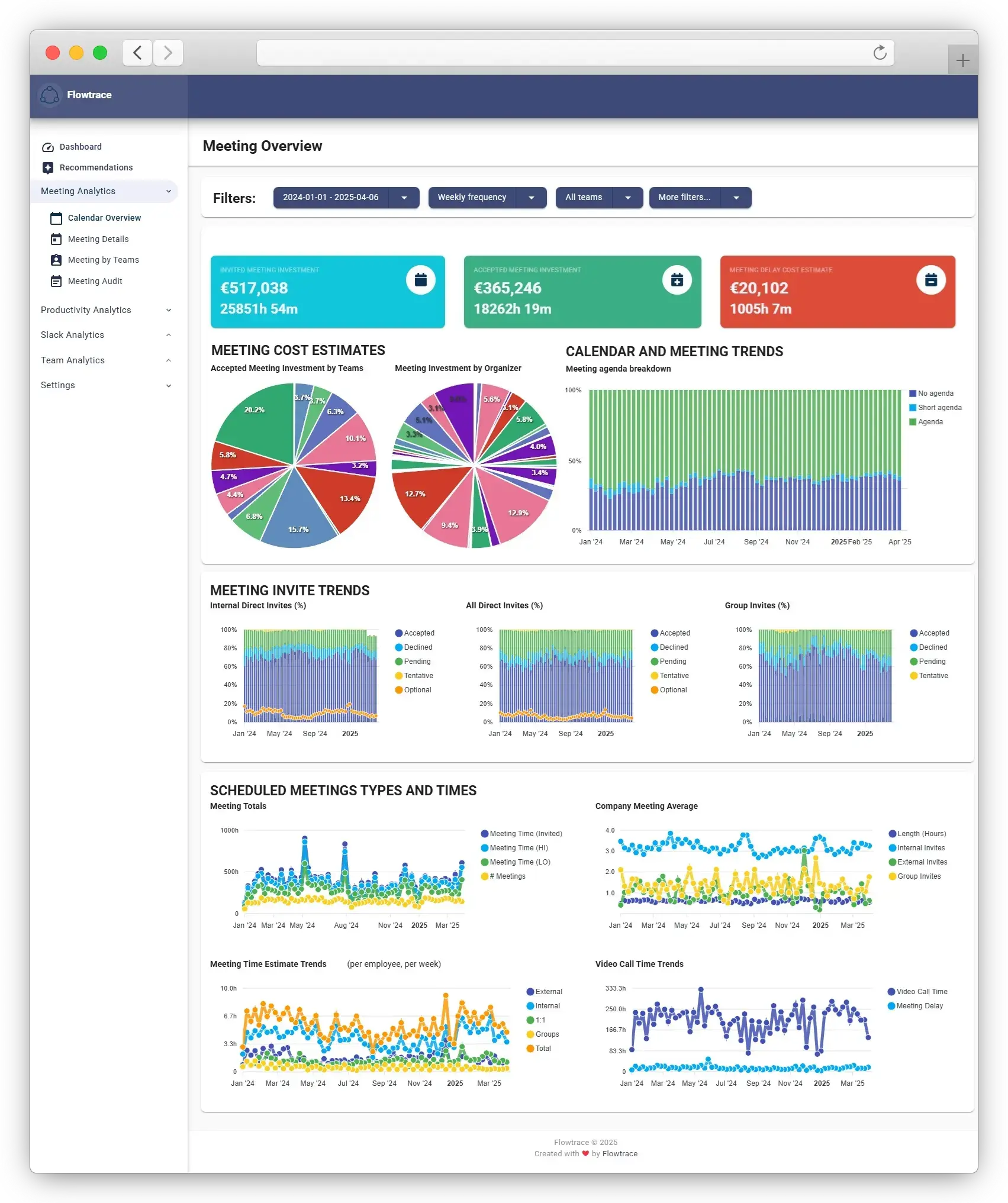
Early corporate analytics focused on historical reporting. Finance teams produced monthly summaries, marketing teams reviewed campaign results after completion, and operations teams analyzed quarterly performance. These processes were useful but inherently reactive.
The introduction of cloud computing during the 2010s accelerated data collection dramatically. Platforms like Amazon Web Services and Google Cloud enabled organizations to store and process massive operational datasets in near real time.
Yet simply collecting more data did not guarantee insight. Many organizations experienced what analysts often describe as “dashboard fatigue,” where teams monitor dozens of metrics without clear guidance on which ones matter most.
Modern performance analytics systems attempt to solve this problem by prioritizing causal relationships instead of raw metrics. Rather than showing hundreds of numbers, the systems highlight which variables most strongly influence outcomes such as revenue growth, employee productivity, or service quality.
Technology researcher Erik Brynjolfsson from Stanford Digital Economy Lab has noted that “data becomes economically valuable only when organizations redesign decisions around it.”
This shift explains why analytics today is less about visualization and more about decision architecture.
How AI Strengthens Performance Analytics
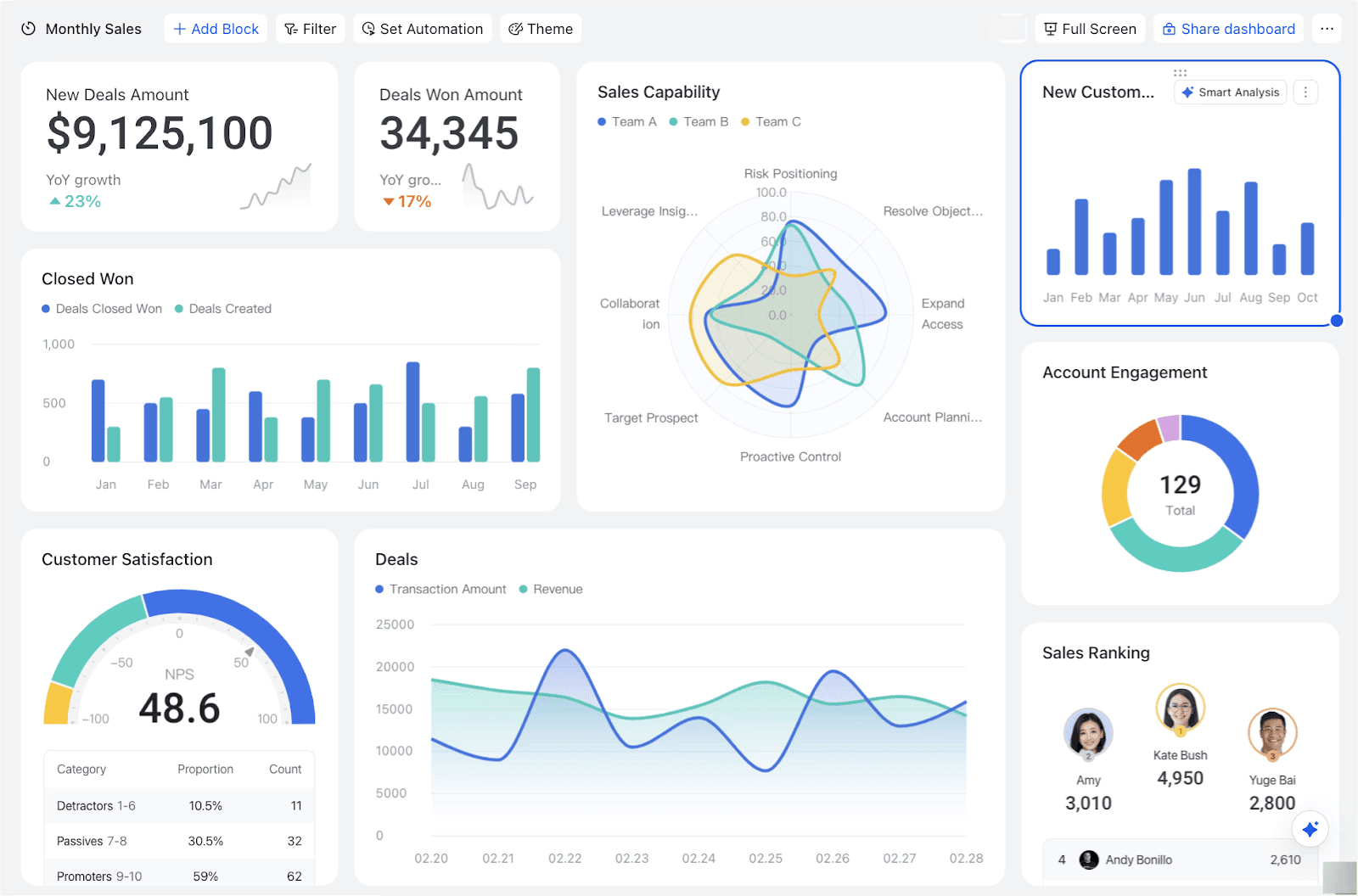
Artificial intelligence has expanded the capabilities of analytics far beyond traditional statistical reporting. Machine learning models can analyze thousands of variables simultaneously and detect patterns that human analysts would rarely identify manually.
Predictive analytics is one of the most widely adopted applications. Instead of analyzing what happened last quarter, organizations now forecast outcomes such as customer churn, supply chain delays, or sales demand.
For example, retail companies often train machine learning models on purchase histories, seasonal trends, and inventory signals to anticipate demand fluctuations weeks in advance.
Another emerging capability is automated anomaly detection. AI systems continuously monitor operational data and alert managers when unusual patterns occur. These alerts can identify fraud, technical failures, or customer service issues much earlier than manual monitoring systems.
Andrew Ng, founder of DeepLearning.AI, once explained the shift succinctly:
“The biggest value of AI is not replacing people. It is amplifying decision making in places where data already exists.”
In this sense, performance analytics acts as the bridge between raw data and AI assisted operational decisions.
From Dashboards to Decision Intelligence

One of the most significant transitions I have seen in enterprise analytics projects is the move from passive dashboards to active decision support systems.
Traditional dashboards answer questions. Decision intelligence systems recommend actions.
For example, an analytics system in a logistics company might not only display delivery delays but also suggest rerouting strategies based on traffic predictions and warehouse inventory levels.
This evolution reflects the integration of three technologies:
| Capability | Traditional Analytics | Modern AI Analytics |
|---|---|---|
| Data scope | Historical data | Real time streaming data |
| Insights | Descriptive | Predictive and prescriptive |
| User interaction | Static dashboards | Actionable recommendations |
| Automation | Minimal | Automated alerts and optimization |
The concept of decision intelligence has gained attention in research institutions such as MIT Sloan School of Management, where analysts emphasize that the goal of analytics should be improved decisions rather than simply improved reporting.
Organizations that adopt this philosophy often redesign workflows around analytics outputs instead of treating them as secondary reports.
The Role of Performance Analytics in Workforce Productivity

Workforce analytics represents one of the fastest growing segments of the analytics ecosystem. Companies increasingly analyze patterns in collaboration, workload distribution, and employee engagement to identify productivity barriers.
However, responsible implementation is essential. Metrics must measure outcomes rather than surveillance style monitoring.
In organizations where I have observed successful analytics adoption, leadership typically focuses on team level insights rather than individual tracking. For instance, analyzing project cycle times can reveal structural inefficiencies such as unclear approval processes or resource bottlenecks.
According to research from the World Economic Forum, data informed management practices are associated with measurable improvements in employee satisfaction when analytics helps remove operational friction.
Behavioral economist Sendhil Mullainathan from University of Chicago has argued:
“Analytics is most powerful when it identifies structural barriers rather than blaming individual workers.”
When used thoughtfully, analytics can support both productivity and workplace well being.
Industry Adoption Patterns
Different industries adopt analytics at different speeds depending on regulatory environments, data maturity, and operational complexity.
Healthcare organizations increasingly rely on predictive models to forecast patient demand and optimize hospital staffing levels. Meanwhile manufacturing companies use sensor data from industrial equipment to predict maintenance needs.
The following table highlights how analytics adoption varies across sectors.
| Industry | Primary Use Case | Key Data Sources |
|---|---|---|
| Healthcare | Patient flow prediction | Electronic health records |
| Retail | Demand forecasting | Purchase and inventory data |
| Manufacturing | Predictive maintenance | Machine sensors |
| Logistics | Route optimization | GPS and shipment data |
| Education | Learning outcomes analysis | Student engagement metrics |
The growth of analytics across these sectors reflects a common realization. Operational data is one of the most underutilized strategic resources inside organizations.
Challenges That Still Limit Analytics Effectiveness
Despite the promise of advanced analytics systems, many organizations still struggle to implement them effectively.
The most common challenge is data fragmentation. Operational information often lives in separate systems such as CRM platforms, financial software, or internal databases. Integrating these sources into a unified analytical framework can require substantial engineering effort.
Another persistent problem is data quality. Inconsistent formatting, missing records, and outdated datasets can undermine model accuracy.
In analytics projects I have evaluated, teams frequently underestimate the amount of work required for data preparation. Analysts sometimes spend more than 60 percent of their time cleaning and organizing datasets before meaningful analysis can begin.
Statistician Hadley Wickham from RStudio famously remarked:
“Data science is about turning raw data into understanding, but most of the work happens before the analysis even starts.”
Organizations that invest in robust data governance frameworks often see significantly better outcomes from analytics initiatives.
Measuring the ROI of Analytics Systems

Executives frequently ask a practical question before investing heavily in analytics infrastructure: does it actually produce measurable financial value?
Research suggests the answer is yes, but only when analytics is integrated directly into decision processes rather than isolated reporting tools.
The Harvard Business Review has reported that organizations with strong data driven cultures are significantly more likely to outperform competitors in revenue growth.
However, measuring the return on analytics requires careful metrics. Instead of evaluating the technology itself, companies should measure operational improvements such as reduced downtime, faster product development cycles, or improved customer retention.
In my experience reviewing enterprise analytics projects, successful organizations typically begin with targeted pilot initiatives before expanding analytics capabilities across departments.
This incremental approach helps demonstrate value while building internal expertise.
Governance, Ethics, and Responsible Data Use

As analytics systems become more influential in decision making, questions about governance and accountability become increasingly important.
Organizations must consider issues such as data privacy, algorithmic bias, and transparency. Regulatory frameworks like the General Data Protection Regulation have already reshaped how companies collect and process personal data.
Responsible analytics programs typically include clear policies for data access, model auditing, and ethical review processes.
Researchers at Oxford Internet Institute emphasize that transparency is essential when automated systems influence decisions affecting individuals.
Ethical analytics practices require organizations to document how models operate, what data they use, and how outcomes are evaluated.
Without these safeguards, analytics can create new risks alongside new capabilities.
The Future of Performance Analytics
The next generation of analytics systems will likely become more autonomous and integrated into everyday operations.
Emerging technologies such as generative AI and real time data pipelines are enabling analytics platforms to generate insights automatically rather than waiting for manual analysis.
For instance, conversational analytics tools allow managers to ask natural language questions about operational performance and receive explanations instantly.
Large language models similar to those developed by OpenAI and Anthropic are already being integrated into enterprise analytics software.
These systems can summarize trends, interpret anomalies, and generate reports with minimal human intervention.
From what I have observed in recent industry deployments, the most exciting development is not just faster analytics but more accessible analytics. When insights become easier to interpret, data driven decision making spreads beyond specialized analysts to entire organizations.
Key Takeaways
- Performance analytics transforms raw operational data into actionable insights that support decision making.
- AI technologies enable predictive modeling, anomaly detection, and automated recommendations.
- Organizations gain the most value when analytics becomes embedded in everyday workflows.
- Data integration and governance remain major implementation challenges.
- Workforce analytics can improve productivity when focused on systems rather than individual monitoring.
- Responsible analytics requires transparency, ethical oversight, and strong data governance practices.
Conclusion
After observing how analytics initiatives unfold across multiple industries, I have come to view performance analytics less as a technology product and more as an organizational capability. Tools and platforms matter, but the real transformation occurs when decision processes evolve alongside them.
Companies that succeed with analytics rarely begin with massive technology deployments. Instead, they identify a few critical decisions where better data could significantly improve outcomes. Once those early successes demonstrate value, analytics gradually becomes part of everyday operations.
The next decade will likely see analytics systems become more intelligent, automated, and conversational. Yet even as algorithms grow more powerful, the human dimension remains central. Analysts, managers, and domain experts still define the questions worth asking.
Ultimately, the goal of analytics is not simply to measure performance but to improve it. When organizations design systems that turn insight into action, data stops being an abstract resource and becomes a practical engine for progress.
Read: YouTube to WAV: Methods, Audio Quality, and Practical Workflow Insights
FAQs
What is performance analytics?
Performance analytics is the practice of analyzing operational data to measure outcomes, identify trends, and improve decision making across business processes.
How does AI improve analytics systems?
AI enables predictive modeling, automated anomaly detection, and advanced pattern recognition that traditional statistical tools cannot easily perform.
Which industries benefit most from analytics?
Healthcare, logistics, manufacturing, retail, and finance widely use analytics to improve forecasting, operations, and customer experience.
What challenges affect analytics adoption?
Common obstacles include fragmented data systems, poor data quality, and lack of integration between analytics insights and operational decisions.
Is analytics replacing human decision making?
No. Analytics supports human judgment by providing clearer insights and evidence based recommendations.
References
Brynjolfsson, E., & McElheran, K. (2016). The rapid adoption of data driven decision making. American Economic Review Papers and Proceedings.
McKinsey & Company. (2024). The state of AI and advanced analytics in organizations.
Ng, A. (2023). Machine learning strategy and enterprise adoption. DeepLearning.AI.
Harvard Business Review. (2022). Building a data driven organization.
World Economic Forum. (2023). The future of jobs report.
Oxford Internet Institute. (2023). AI governance and accountability frameworks.