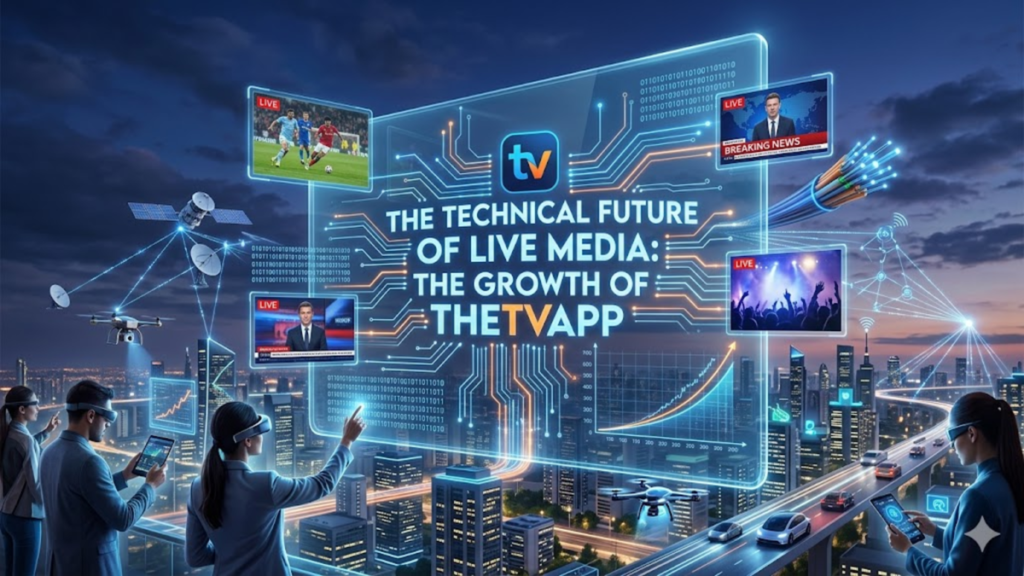

The landscape of digital media is undergoing a profound structural shift, moving away from centralized cable bundles toward agile, web-based interfaces. Among these emerging tools, thetvapp has surfaced as a notable example of the “minimalist stream” philosophy—prioritizing low-latency access to live broadcasts without the heavy architectural bloat of traditional providers. From a systems perspective, this represents more than just a convenience for the end-user; it signifies a transition toward “edge-ready” media consumption. For those of us tracking emerging technology, the emergence of such platforms highlights a growing demand for unencumbered data streams that can eventually be integrated with personalized AI overlays or real-time translation layers.
The technical allure of thetvapp lies in its ability to aggregate disparate live sources into a unified, high-performance UI. In an era where “platform fatigue” is a genuine hurdle for digital adoption, the move toward simplified, browser-based access points is a pragmatic response to consumer frustration. As we look at the infrastructure required to support these services, we see a reliance on robust Content Delivery Networks (CDNs) and adaptive bitrate streaming that ensures stability even under high concurrent loads. This article explores the technical underpinnings of these streaming systems, their place in the broader technology stack, and how the future of live media will likely be defined by the synthesis of human-curated content and machine-driven delivery optimization.
The Architecture of Modern Web-Based Streaming
The backbone of any modern streaming interface, including thetvapp, relies on a sophisticated stack designed to minimize the “handshake” time between a user’s request and the delivery of the first frame. Unlike traditional apps that require heavy local installation, web-first platforms utilize HTML5 video capabilities and Media Source Extensions (MSE). This allows for a modular delivery system where the video is broken into small, encrypted chunks. By leveraging decentralized server nodes, these platforms reduce the physical distance data must travel, effectively “shortening the wire” for the consumer.
Check Out: Generative Video Models Explained Without Hype
Decoding the User Experience of thetvapp
The user interface (UI) of thetvapp reflects a broader trend in software design: the “invisible” interface. By stripping away intrusive advertising clusters and complex nested menus, the platform focuses on the primary objective—content discovery. This design choice is not merely aesthetic; it reduces the computational load on the client side, allowing the service to run smoothly on lower-spec hardware, such as older tablets or budget-friendly smart TVs. It is a masterclass in functional minimalism that many enterprise-level applications would do well to emulate.
Comparative Infrastructure Analysis
To understand where these platforms sit in the current market, we must compare their technical requirements against traditional streaming giants.
| Feature | Web-Based Aggregators (e.g., thetvapp) | Traditional SVOD (Netflix/Hulu) |
| Primary Protocol | HLS / DASH | Proprietary DRM-heavy stacks |
| Latency Goal | < 10 Seconds (Live) | Variable (VOD focused) |
| Client Overhead | Minimal (Browser-based) | High (Native Apps) |
| Content Model | Live Linear Feed | On-Demand Library |
The Role of Adaptive Bitrate (ABR) Logic
One of the most critical components of the modern streaming experience is the ABR algorithm. These scripts constantly monitor the user’s available bandwidth and adjust the video quality in real-time to prevent buffering. “The goal of any high-availability media platform is to ensure the stream never stops, even if the resolution must temporarily dip,” says Dr. Aris Xanthos, a senior researcher in digital delivery systems. In the context of thetvapp, the implementation of efficient ABR ensures that users on mobile networks maintain a consistent connection to live events.
Security and Protocol Challenges in Live Media
Deploying a live stream via the web involves navigating a complex web of security protocols. From CORS (Cross-Origin Resource Sharing) headers to SSL/TLS encryption, ensuring that a stream is both accessible and secure is a delicate balance. Developers must ensure that the stream manifests are protected from unauthorized scraping while remaining open enough for standard browsers to parse. This “open-closed” paradox is a constant tension point for engineers working on platforms like thetvapp, as they seek to provide ease of use without compromising the integrity of the delivery network.
The Impact of 5G on Edge Streaming
The rollout of 5G technology is perhaps the single greatest catalyst for platforms like thetvapp. With 5G’s high throughput and ultra-low latency, the “last mile” of data delivery is no longer the bottleneck it once was. This allows for higher definition streams and more complex metadata to be embedded within the video feed. “We are moving toward a world where the distinction between a local file and a cloud-based stream is indistinguishable to the human eye,” notes systems architect Sarah Chen.
Integration with Generative Media Overlays
Looking forward, the next phase for platforms like thetvapp involves the integration of AI-driven overlays. Imagine a live sports broadcast where an AI layer provides real-time stats or translates commentary into fifteen different languages instantly. The infrastructure being built today to support simple streaming is the foundation for these “augmented media” experiences. By providing a clean, reliable stream, these platforms act as the raw input for the next generation of creative AI applications.
Resource Allocation and Server Efficiency
Efficient resource management is what separates a sustainable streaming platform from a failed experiment. By utilizing “serverless” functions to handle user authentication and metadata fetching, platforms can scale up instantly during major live events (like a championship game or a breaking news cycle) and scale down during off-peak hours. This elasticity is central to the operational logic of modern web apps, ensuring that thetvapp remains responsive regardless of the global traffic volume.
Market Adoption and the “Cord-Cutting” 2.0 Movement
The first wave of cord-cutting was about moving to on-demand libraries. The second wave, which we are currently in, is about reclaiming the live experience through digital-native means. Consumers are increasingly seeking out tools like thetvapp because they offer the familiarity of linear television with the flexibility of the open web. This hybrid model represents the future of media consumption—a blend of scheduled programming and on-demand accessibility.
Future Projections: From Streams to Ecosystems
As we look toward the 2030s, the role of the “app” may disappear entirely, replaced by universal media portals. The technical groundwork laid by current streaming projects suggests a trajectory toward complete interoperability. “The container matters less than the connectivity,” argues media analyst Marcus Thorne. Platforms like thetvapp are early iterations of this “container-less” future, where the content flows through whichever interface the user happens to be using at that moment.
Key Takeaways
- Minimalist Design: Platforms like thetvapp prioritize low-latency and UI simplicity to reduce “platform fatigue.”
- Technical Agility: The use of HLS and ABR protocols allows for high-quality streaming across diverse hardware.
- 5G Synergy: High-speed mobile networks are the primary drivers for the growth of browser-based live media.
- AI Readiness: Clean, stable live streams are essential raw data for future AI-augmented viewing experiences.
- Shift in Consumption: We are witnessing a “Cord-Cutting 2.0” movement focused on digital-native linear TV.
Conclusion
The evolution of streaming technology is a testament to the persistent human desire for real-time connection. Platforms like thetvapp demonstrate that the future of media is not necessarily about more complex features, but about more efficient access. By focusing on the core utility of live delivery, these systems bypass the bloat of traditional media ecosystems and offer a glimpse into a more decentralized, user-centric landscape. As an observer of emerging systems, I find the shift toward lightweight, web-first architectures to be one of the most practical applications of modern network engineering. While the specific tools we use may change, the underlying movement toward unencumbered, high-speed information flow is an irreversible trend that will continue to shape our digital lives.
Check Out: How to Connect AI Hardware to Wi-Fi for Optimal Speed
FAQs
1. What is the technical advantage of web-based apps like thetvapp?
Web-based apps use standard protocols like HLS and DASH, allowing them to run in any modern browser without requiring specific OS-level installations. This reduces friction for the user and lowers the development overhead for the provider.
2. How does thetvapp handle high traffic during live events?
Most modern streaming platforms use Content Delivery Networks (CDNs) to cache content across various global servers. This ensures that when millions of people tune in, the load is distributed, preventing any single server from crashing.
3. Is the quality of live web streaming comparable to cable?
Yes, with current fiber and 5G connections, web streams can reach 4K resolution. Technologies like Adaptive Bitrate Streaming ensure that the quality remains as high as your current connection allows.
4. Can AI be integrated into these streaming platforms?
Absolutely. Because these streams are digital-native, AI can be applied at the “edge” to provide real-time captions, object recognition within the video, or personalized content recommendations based on viewing habits.
5. Why is the “minimalist” UI trend growing in streaming?
Users are increasingly overwhelmed by complex interfaces. A minimalist approach, as seen with thetvapp, focuses on getting the user to the content as quickly as possible, improving retention and satisfaction.