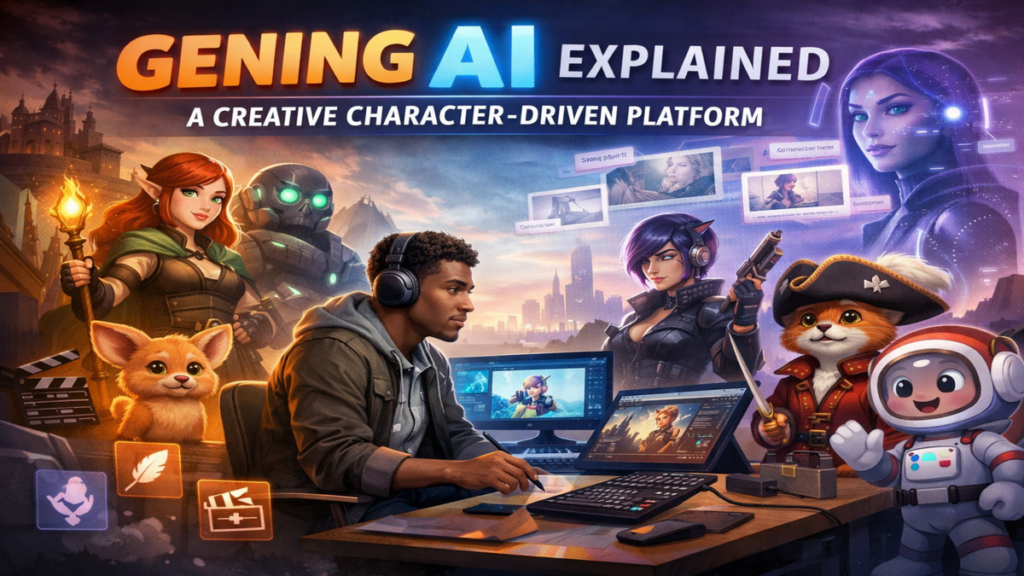

I approach this topic as someone who enjoys exploring how conversational systems are shifting from simple question answering into full creative environments. When I first spent time with Gening AI, what stood out to me was not speed or novelty, but the way it blended conversation, imagination, and visual tools into a single browser based experience. Instead of feeling like a chatbot designed for productivity, it felt closer to a sandbox where stories, characters, and worlds slowly take shape through interaction. This article explains how the platform works, what makes it different from similar services, and why it appeals to users who value creative freedom over rigid structure.
What Gening AI Is and Why It Exists
Gening AI is a browser based character chat platform built around customizable artificial personalities rather than a single assistant. The core idea is simple but powerful. Instead of talking to one generic AI, users choose or create characters, define their tone, and allow conversations to evolve with memory and continuity.
The platform exists to serve users who want immersive roleplay, open ended storytelling, and creative experimentation. It does not position itself as a therapy tool or productivity assistant. Its purpose is expression, imagination, and interaction without heavy onboarding or technical setup.
Unlike many applications that require accounts, setup flows, and long tutorials, this platform emphasizes immediate access. You open the site, pick a character, and start chatting. That simplicity lowers friction and encourages experimentation.
Core Design Philosophy Behind Character Based AI
Characters Instead of Assistants
Most conversational systems focus on being helpful, accurate, and efficient. Character driven platforms flip that priority. Here, consistency of personality matters more than factual precision. A knight in a fantasy world should speak like a knight, not like a search engine.
Gening AI leans into this idea by treating characters as narrative entities. They have attitudes, speech patterns, and contextual memory. Over time, the conversation feels less like prompts and responses and more like shared storytelling.
Memory as a Creative Tool
Memory retention plays a critical role. Rather than resetting each session, conversations build on prior exchanges. This allows relationships, plotlines, and emotional dynamics to develop organically.
Memory is not just about recalling facts. It is about maintaining tone, emotional context, and narrative continuity. That is why users often describe the experience as world building rather than chatting.
How Multimodal Features Shape the Experience
One of the most defining aspects of the platform is its embrace of visual generation alongside text.
Text to Image Integration
Users can generate images directly from narrative moments. A description of a character entering a city can become a visual scene. This adds depth and makes storytelling feel tangible.
Images are not treated as decorative extras. They are part of the creative loop. Text inspires images, images inspire new dialogue, and dialogue reshapes the story.
Face Swap and Avatar Tools
For users who want deeper immersion, face swap features allow characters or scenes to feel personalized. This is especially popular in roleplay contexts where visual identity matters.
These tools shift the experience from reading and writing into something closer to collaborative world creation.
Customization Options and Creative Control
Pre Made Characters
The platform includes a library of ready made characters across genres such as fantasy, sci fi, romance, and casual conversation. These are designed to help new users get started without needing to design everything from scratch.
Each character comes with a baseline personality and narrative hook. Users can modify tone, behavior, and memory scope as conversations progress.
Tone and Personality Tweaks
Customization does not stop at character selection. Users can adjust how characters respond, whether they are serious, playful, dramatic, or introspective. These adjustments shape the flow of conversation more than raw prompt engineering.
This approach favors intuitive creative control over technical complexity.
Comparison With wsup.ai
Both platforms operate in the character driven AI space, but their priorities differ.
Focus and Strengths
Wsup.ai emphasizes deep roleplay through text alone. It excels at personality adaptation and long narrative arcs without visual elements. The experience is closer to collaborative writing.
Gening AI, by contrast, blends conversation with visual creativity. Its strength lies in multimodal storytelling rather than pure text immersion.
Feature Comparison Table
| Feature Area | Gening AI | Wsup.ai |
|---|---|---|
| Core Interaction | Character chats with visuals | Text only roleplay |
| Visual Tools | Text to image, face swap | None |
| Access Model | Browser based, no signup | Browser based |
| Customization | Character library and tone controls | Deep personality creation |
| Ideal Use | Visual storytelling and experimentation | Long form narrative roleplay |
This comparison highlights a philosophical difference rather than a quality gap. Each platform serves a distinct creative preference.
Comparison With Replika
Replika occupies a very different emotional and functional space.
Emotional Support Versus Creative Freedom
Replika is designed as a single evolving companion focused on emotional support, reflection, and daily conversation. It prioritizes empathy, stability, and long term bonding.
Gening AI prioritizes creative freedom and variety. Users are not building one relationship but many possible narratives. Emotional depth can exist, but it is framed through storytelling rather than mental health support.
Structural Differences
| Aspect | Gening AI | Replika |
|---|---|---|
| Primary Goal | Creative roleplay and world building | Emotional companionship |
| Character Count | Multiple customizable characters | One evolving avatar |
| Content Filters | More permissive roleplay | Strict moderation |
| Visual Generation | Integrated generative visuals | Avatar visuals only |
| Typical Session | Narrative driven exploration | Conversational check ins |
These differences explain why users choose one over the other based on intent rather than quality.
Use Cases and Real World Applications
Creative Writing and Story Development
Writers use the platform to explore characters, test dialogue, and visualize scenes. It functions as a brainstorming partner that responds creatively rather than critically.
Casual Roleplay and Entertainment
Many users engage purely for enjoyment. Short sessions of fantasy roleplay or character interaction provide relaxation and escapism without commitment.
Visual Concept Exploration
Designers and hobbyists use text to image features to prototype character looks, environments, and moods. This makes the platform useful beyond conversation.
Accessibility and Browser Based Simplicity
One of the platform’s strongest advantages is accessibility. Because it runs entirely in the browser, there is no installation barrier. Users can experiment instantly without creating accounts or managing subscriptions upfront.
This approach aligns with casual creativity. It invites curiosity rather than demanding commitment.
Limitations and Considerations
While creative freedom is a strength, it also introduces challenges.
Consistency Over Long Sessions
As narratives grow complex, maintaining coherence can require user guidance. The system supports memory, but it still benefits from thoughtful direction.
Not Designed for Productivity or Therapy
Users seeking factual assistance or emotional counseling may find the experience unfocused. The platform is intentionally playful and imaginative rather than structured or supportive.
Ethical and Content Considerations
Permissive creative environments raise important questions. Open roleplay requires responsible use and clear user awareness. The platform places control in the hands of users rather than enforcing heavy restrictions.
This design choice reflects a trust in creative autonomy rather than centralized moderation.
Future Direction of Character Driven Platforms
Character based AI platforms represent a shift away from utility focused design toward experiential interaction. As multimodal tools mature, these environments may evolve into collaborative storytelling spaces, virtual worlds, or creative studios.
Gening AI reflects this trend by prioritizing imagination over instruction.
Conclusion
I see this platform as part of a broader movement where conversational systems become creative partners instead of assistants. Its value lies not in answers, but in interaction. For users who enjoy storytelling, roleplay, and visual imagination, it offers a flexible and inviting space. While it is not meant for every use case, it fills an important niche where creativity and conversation intersect.
Read: https://veomodels.com/wsup-ai/
FAQs
What makes Gening AI different from standard chatbots
It focuses on characters, memory, and creative storytelling rather than factual assistance or productivity tasks.
Can it be used without creating an account
Yes, users can access and start chatting directly through the browser without signup.
Is the platform suitable for long narratives
It supports memory and continuity, making it suitable for extended roleplay and evolving storylines.
Does it include visual generation tools
Yes, it integrates text to image features and visual customization for immersive storytelling.
Who is the ideal user for this platform
It suits writers, roleplay enthusiasts, and users seeking creative interaction rather than structured assistance.