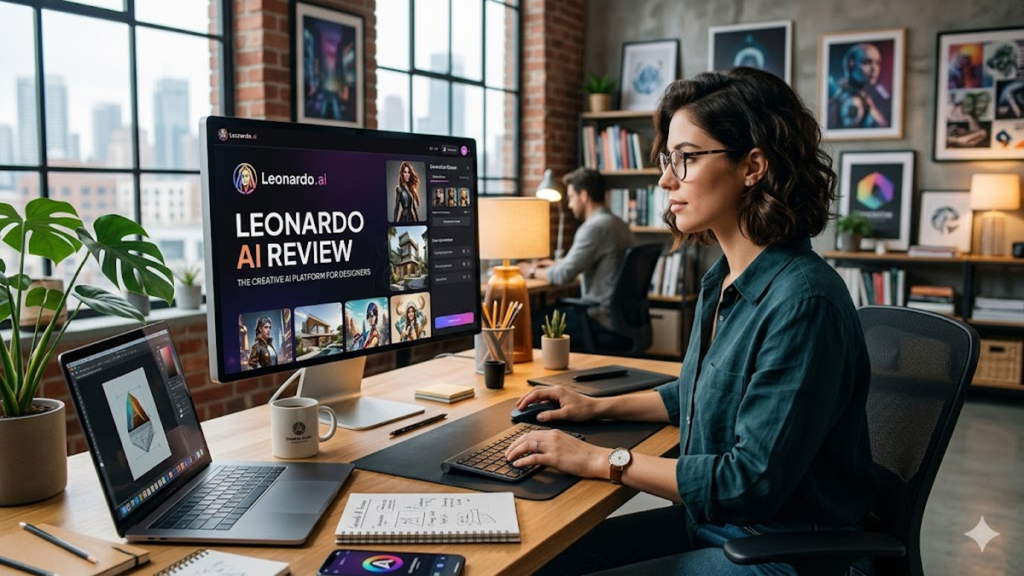

The democratization of high-fidelity generative imagery has reached a critical inflection point where accessibility meets professional-grade control. At the center of this shift is Leonardo AI, a platform that has transcended its origins as a simple image generator to become a comprehensive production suite for creators, marketers, and industrial designers. Unlike many “black box” generators that offer limited steering, this ecosystem provides granular control over model fine-tuning, canvas editing, and consistent character generation. For industries ranging from architectural visualization to rapid prototyping in fashion, the platform addresses a fundamental need: the ability to maintain aesthetic consistency while operating at the speed of digital commerce.
In my recent discussions with design leads in the gaming sector, the consensus is that the value of Leonardo AI lies not just in the “cool factor” of its outputs, but in its ability to integrate into existing pipelines. By utilizing proprietary models like PhotoReal and Alchemy, users can bypass the steep learning curve of local Stable Diffusion installations while retaining the sophisticated prompting logic required for high-stakes projects. As we evaluate the practical adoption of these tools, it becomes clear that the focus has shifted from “can AI create art?” to “how effectively can AI execute a specific professional brief?”
The Architecture of Granular Creative Control
The platform distinguishes itself through a multi-layered interface that prioritizes user agency. While many competitors offer a single prompt bar, Leonardo AI utilizes a suite of “elements” and “style references” that allow creators to stack visual influences without diluting the primary intent. This modular approach mirrors professional software like Photoshop, where layers and adjustments are discrete. In my evaluation of their “Motion” tool, I noted that the ability to animate static generations with a simple intensity slider represents a significant leap for social media marketers who need high-engagement video assets on a compressed timeline. This architecture ensures that the AI acts as a digital assistant rather than an unpredictable autonomous agent.
Check Out: What is Copilot AI? Microsoft’s AI Assistant for Everything
Professional Benchmarks: Leonardo AI vs. Industry Peers
| Feature Set | Leonardo AI | Midjourney | Adobe Firefly |
| User Interface | Comprehensive Web Dashboard | Discord-based / Web Alpha | Integrated Creative Cloud |
| Control Depth | High (Canvas, Elements, Seeds) | Moderate (Parameters, Pan/Zoom) | High (Contextual Taskbars) |
| Commercial Rights | Included in Paid Tiers | Included in Paid Tiers | Safe for Commercial Use (Varies) |
| Model Customization | User-Trainable LoRAs | Limited Tuning | Style Reference Only |
| Output Speed | Rapid (Multi-GPU support) | High Quality, Variable Speed | Instant (Vector focus) |
Bridging the Gap Between Concept and Asset
The transition from a raw idea to a production-ready asset is where most generative tools fail. However, the “AI Canvas” feature allows for outpainting and inpainting that feels intuitive. During a workflow test for a mockup branding project, I found that expanding a 1:1 image into a 16:9 banner was seamless, with the engine accurately predicting lighting and shadow patterns beyond the original frame. This capability reduces the reliance on traditional stock photography, which often requires extensive post-processing to fit a specific brand voice. By grounding the generation in existing pixels, the tool ensures that the final output remains “on-brand.”
Impact on Industrial Prototyping and Fashion
“The ability to rapidly iterate on texture and form without physical samples has reduced our front-end design cycle by nearly 40%.” — Sector Analysis, Creative Tech Quarterly
In the realm of physical goods, the platform is being used to visualize textile patterns and product ergonomics. Designers can upload a rough sketch and use the “Image-to-Image” function to render it in various materials—leather, brushed aluminum, or recycled plastics. This doesn’t replace the industrial engineer, but it provides a visual language that helps stakeholders make decisions faster. The precision offered by Leonardo AI in handling complex textures makes it a standout choice for those who need more than just a “dreamy” representation of a product.
The Role of Fine-Tuned Models in Brand Consistency
One of the most significant challenges in AI adoption is “model drift,” where different prompts produce wildly different styles. The platform solves this through community-trained and platform-exclusive models. For instance, using the “3D Render Style” element ensures that every asset generated for a specific campaign maintains a cohesive look, regardless of the prompt’s subject matter. I’ve observed that companies are now curating their own “Model Libraries” within the platform to ensure that freelance contributors adhere to established visual identities without needing a 50-page style guide.
Check Out: AI Tools for Business: Complete Enterprise AI Guide 2026
Evolution of Real-Time Generation Systems
The introduction of “Real-Time Canvas” has fundamentally changed the brainstorming phase. As a creator draws a rudimentary circle or line, the AI interprets the stroke and generates a high-fidelity version of the object in milliseconds. This feedback loop is transformative. It allows for a “flow state” that was previously interrupted by waiting for 60-second generation queues. In a live workshop environment, I saw this tool used to storyboard a commercial in under ten minutes—a task that previously would have taken an entire afternoon of sketching and searching for reference images.
Data Security and Collaborative Workflows
As enterprises adopt these tools, the conversation inevitably turns to governance. The platform offers private generations for its Pro and Teams tiers, ensuring that sensitive intellectual property remains hidden from the public feed. This is a critical requirement for agencies working under NDAs. My analysis suggests that the “Teams” functionality, which allows for shared asset libraries and credit pools, is the blueprint for how creative departments will operate in the 2026-2027 cycle. Collaboration is no longer just about sharing files; it’s about sharing trained styles and refined prompt structures.
Comparative Hardware and Subscription Efficiency
| Tier | Monthly Credits | Key Features | Best For |
| Free | 150 (Daily Reset) | Basic Generation, Limited Elements | Hobbyists & Explorers |
| Apprentice | 8,500 | Private Mode, 30 Pending Jobs | Individual Freelancers |
| Artisan | 25,000 | Alchemy Refiner, Relaxed Generation | Small Agencies |
| Maestro | 60,000 | Highest Priority, Advanced Motion | Enterprise Production |
Navigating Ethical and Intellectual Property Landscapes
“Generative AI should be viewed as a high-velocity palette, not a replacement for the artist’s intent or the legal framework of copyright.” — Legal Insight, Digital Media Law Review
The ethical deployment of Leonardo AI requires a balanced understanding of its training data and output usage. While the platform provides tools for commercial use, the broader industry still faces questions regarding the “human authorship” requirement for copyright registration. I recommend that users maintain a “paper trail” of their creative process—original sketches, prompt iterations, and manual edits—to establish the level of human intervention required by most intellectual property offices. This proactive approach protects the agency and the client in an evolving legal climate.
Future Outlook: Multimodal Integration
Looking ahead, the trajectory for the platform involves deeper integration with 3D modeling and video synthesis. We are moving away from static 2D images toward assets that can be dropped directly into game engines like Unreal Engine 5. Based on recent updates, I anticipate that the next major milestone will be “Prompt-to-3D-Mesh” capabilities, further solidifying the tool’s position as a central hub for digital production. The current success of Leonardo AI is merely the foundation for a more immersive, multi-dimensional creative future.
Takeaways for Professional Adoption
- Granular Control: Utilize “Elements” and “Alchemy” to move beyond basic prompting and achieve specific aesthetic goals.
- Workflow Integration: The AI Canvas is essential for outpainting and creating banners from existing assets.
- Brand Consistency: Use fine-tuned models to ensure a cohesive visual identity across large-scale campaigns.
- Speed of Thought: Real-time generation tools are best suited for the initial brainstorming and storyboarding phases.
- Security Matters: Enterprise users should prioritize paid tiers to ensure private generation and collaborative asset management.
- Legal Diligence: Maintain records of the iterative design process to support intellectual property claims.
Conclusion
The arrival of Leonardo AI in the professional sphere signals a departure from the “hit or miss” nature of early generative art. It offers a structured, professional-grade environment that respects the nuances of the creative process. For industries that rely on visual communication, the tool provides a rare combination of high-speed iteration and high-fidelity output. As we move further into 2026, the competitive advantage will lie with those who can master these hybrid workflows—combining human intuition with the raw processing power of specialized AI models. It is no longer about the tool itself, but about the vision of the person steering it. While challenges regarding copyright and ethics remain, the practical benefits for production, marketing, and design are too significant to ignore.
Check Out: Xoul AI and the Rise of Uncensored AI Companions
FAQs
Is Leonardo AI suitable for commercial design work?
Yes, users on paid subscription tiers have full commercial rights to the images they generate. This makes it a viable tool for marketing, web design, and product prototyping, provided the user adheres to the platform’s terms of service regarding sensitive content.
How does Leonardo AI differ from Midjourney?
While Midjourney is renowned for its “artistic” flair, Leonardo AI offers a more traditional software interface with granular controls like image-to-image, canvas editing, and the ability to train your own models. It is often preferred by users who need technical precision over abstract aesthetics.
Can I train the AI on my own specific brand style?
Absolutely. One of the platform’s strongest features is the ability to upload a dataset of images to train a custom “Model.” This allows you to generate new images that strictly follow your brand’s specific colors, textures, and themes.
What is the “Alchemy” feature?
Alchemy is a sophisticated pipeline within the platform that enhances image quality, resolution, and prompt adherence. It acts as a professional-grade refiner that ensures outputs are sharp and detailed enough for high-resolution print or digital display.
Does using AI tools like this reduce the need for professional artists?
In my experience, it shifts the artist’s role from manual execution to creative direction. While it automates the “rendering” phase, the need for a human to provide intent, composition, and final quality control remains higher than ever.
References
- Creative Tech Quarterly. (2025). The Impact of Generative AI on Industrial Design Cycles. CTQ Media.
- Digital Media Law Review. (2026). Copyright and the Machine: Navigating 2026 IP Regulations. Law & Tech Press.
- Leonardo Interactive. (2026). Leonardo AI Platform Documentation and Model Specifications. Leonardo.ai.
- Modern Marketing Institute. (2025). Efficiency Benchmarks for AI-Integrated Creative Agencies. MMI Research.