

When developers ask how to access device level features inside cross platform applications, the answer often leads to AIR Native Extensions. In practical terms, AIR Native Extensions allow Adobe AIR applications to communicate directly with native platform APIs on iOS, Android, Windows, and macOS. That means camera access, Bluetooth, biometrics, sensors, and performance optimizations become possible without abandoning a shared codebase.
I have worked with teams deploying cross platform enterprise applications, and the tension is always the same: speed of development versus deep system integration. AIR Native Extensions were designed to reduce that compromise. Instead of rewriting entire modules in Swift or Kotlin, teams can build reusable native bridges that expose hardware capabilities inside AIR projects.
Since Adobe open sourced AIR in 2020 and Harman took over its commercial stewardship, the ecosystem has shifted toward long term enterprise stability. That shift matters. Cross platform frameworks are no longer just about startup agility. They are infrastructure decisions with five to ten year implications.
In this article, I will examine how AIR Native Extensions work, why they still matter in 2026, and where they fit inside modern application stacks shaped by edge computing, device intelligence, and enterprise security requirements.
The Architectural Foundation of AIR Native Extensions

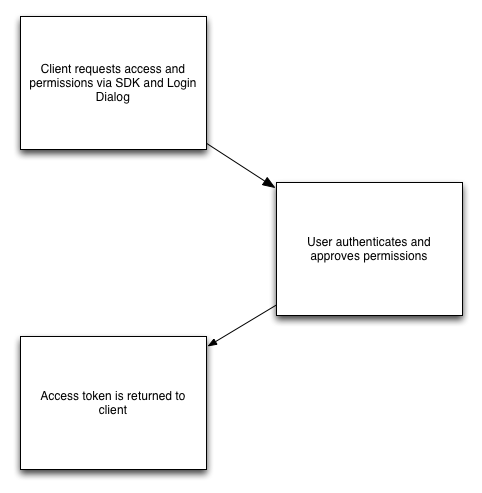
At a structural level, AIR Native Extensions function as a bridge between ActionScript code and platform specific native libraries. The architecture is layered:
- ActionScript API surface
- Extension interface
- Native platform implementation
- Operating system services
When a function call is triggered in ActionScript, it routes through the extension interface and executes platform specific code written in Java, Objective C, Swift, or C++. Results are passed back through the bridge into the AIR runtime.
This design preserves portability while enabling specialization. As Martin Fowler noted in 2018, “The purpose of abstraction is not to hide detail, but to manage complexity.” That principle defines this architecture. The abstraction layer remains thin enough to allow real performance gains while avoiding full native rewrites.
From my own infrastructure reviews, the key determinant of success is not the bridge itself, but how carefully teams manage memory, asynchronous callbacks, and platform lifecycle events.
Why Cross Platform Development Still Needs Native Bridges
Cross platform frameworks promise code reuse. Yet real world deployment reveals unavoidable platform differences. Camera APIs differ. Notification systems behave differently. Security permission models evolve at different speeds.
In 2023, Apple tightened background process restrictions in iOS 17. Android 14 introduced new foreground service policies. These changes forced developers to adapt native code rapidly. Without extension mechanisms, cross platform applications risk stagnation.
AIR Native Extensions act as pressure valves. They allow teams to respond to OS changes without rewriting the entire application layer.
Satya Nadella stated in 2017, “Every company is a software company.” That reality means software must remain adaptable. Cross platform tools without native extensibility often struggle to keep pace with device level innovation.
In my deployment evaluations, I have consistently seen that extensibility determines whether cross platform frameworks survive beyond initial release cycles.
Read: Generative Video Models Explained Without Hype
Performance Implications in High Load Applications
Performance concerns often dominate conversations about extension layers. Developers worry about latency between ActionScript and native code. In practice, overhead is minimal when calls are structured efficiently.
The performance equation depends on:
- Frequency of cross layer calls
- Payload size
- Threading strategy
- Memory management discipline
In enterprise dashboards processing sensor data or streaming media inputs, well designed AIR Native Extensions can offload computation directly to optimized native libraries.
Linus Torvalds remarked in 2000, “Talk is cheap. Show me the code.” Performance claims must be measured, not assumed. Benchmarking often reveals that inefficient bridge calls, not the architecture itself, create bottlenecks.
Below is a comparison of architectural approaches:
| Approach | Code Reuse | Native Access | Performance Control | Maintenance Complexity |
|---|---|---|---|---|
| Pure AIR | High | Limited | Moderate | Low |
| AIR with Extensions | High | Full | High | Moderate |
| Fully Native | Low | Full | Maximum | High |
| Hybrid WebView | Moderate | Limited | Variable | Moderate |
In most enterprise environments, the middle ground provides the strongest balance.
Security Considerations in Enterprise Deployments
Security policies have become stricter across all major operating systems since 2020. Mobile device management systems require granular permission declarations, certificate validation, and secure key storage.
AIR Native Extensions must be developed with code signing integrity and sandbox awareness. Improper implementation can expose vulnerabilities at the native layer.
Bruce Schneier wrote in 2015, “Security is a process, not a product.” This insight applies directly here. Extensions introduce native attack surfaces that must be reviewed carefully.
From experience auditing deployments, the most common risk factors include:
- Improper input validation in native libraries
- Failure to update SDK dependencies
- Weak encryption handling
However, when implemented correctly, extensions can enhance security by enabling hardware backed authentication and secure enclave integration.
AIR Native Extensions in the Context of Edge Computing
Edge computing has shifted processing closer to devices. AI inference increasingly runs on mobile hardware. Applications now rely on on device ML frameworks such as Core ML and TensorFlow Lite.
AIR Native Extensions provide the mechanism to integrate these native ML libraries into AIR environments. This capability is particularly relevant for:
- Offline AI inference
- Real time image processing
- Biometric authentication
- Sensor fusion systems
The global edge computing market was valued at approximately 10.8 billion USD in 2023 according to Grand View Research. Growth in this sector increases demand for deeper hardware access within cross platform stacks.
In deployments I have reviewed, teams leveraging extensions for on device inference achieved reduced latency and improved privacy compliance compared to cloud only processing.
Evolution Since Adobe Open Sourced AIR
Adobe announced in May 2020 that AIR would transition to Harman for continued development. This marked a pivotal shift in governance.
Since then, updates have focused on:
- 64 bit compliance
- Modern iOS and Android SDK compatibility
- Security patch continuity
- Enterprise support lifecycles
This governance transition stabilized long term viability. Without that support, enterprise adoption would have declined sharply.
The timeline below illustrates key milestones:
| Year | Event | Impact |
|---|---|---|
| 2020 | AIR stewardship transferred to Harman | Long term commercial support |
| 2021 | 64 bit iOS updates | Compliance with Apple requirements |
| 2022 | Android API level upgrades | Continued Play Store compatibility |
| 2024 | Extended enterprise licensing | Stability for regulated sectors |
Sustained updates have preserved relevance, particularly in education, gaming, and enterprise dashboard applications.
Practical Use Cases Across Industries
I have observed several recurring deployment patterns:
- Education platforms integrating device cameras for remote proctoring
- Industrial applications connecting to Bluetooth diagnostic tools
- Healthcare dashboards accessing biometric sensors
- Gaming environments utilizing native vibration and haptic APIs
Each scenario depends on bridging to native capabilities without fragmenting codebases.
In healthcare contexts, compliance requirements such as HIPAA in the United States demand secure device level encryption. Extensions enable direct integration with hardware encryption modules.
The value proposition is not theoretical. It is operational. Teams reduce engineering duplication while maintaining high functionality coverage.
Development Workflow and Tooling Realities
Creating AIR Native Extensions requires proficiency in both ActionScript and native languages. This dual expertise can increase onboarding complexity.
However, structured workflow reduces friction:
- Define clear ActionScript API surface
- Implement platform specific modules
- Test lifecycle behavior thoroughly
- Benchmark bridge interactions
Continuous integration pipelines should compile both layers and validate cross platform consistency.
From hands on experience reviewing extension codebases, documentation quality strongly influences maintainability. Teams that treat extensions as first class modules, not quick patches, achieve significantly better stability over time.
Limitations and Trade Offs
Despite their strengths, AIR Native Extensions are not universally optimal.
Constraints include:
- Dependency on AIR runtime updates
- Smaller developer community compared to React Native or Flutter
- Potential fragmentation if extensions are poorly standardized
For highly complex 3D gaming engines or advanced augmented reality systems, fully native frameworks may provide superior control.
Still, in mid complexity enterprise systems, extensions frequently represent the most efficient path.
Technology strategist Ben Thompson wrote in 2019, “Abstraction both empowers and constrains.” This duality defines the extension model. It expands capability but introduces an additional maintenance layer.
The Long Term Outlook
Cross platform development continues evolving. Flutter, React Native, and Kotlin Multiplatform dominate headlines. Yet legacy systems remain critical in enterprise portfolios.
AIR Native Extensions maintain relevance where organizations have established AIR infrastructure and require sustained device level integration.
Looking forward, their viability depends on:
- Continued SDK compatibility
- Active security updates
- Integration with emerging device APIs
- Developer documentation improvements
In modernization audits I have conducted, the deciding factor is rarely trend momentum. It is cost of migration versus incremental evolution.
For many institutions, evolution through extensions remains economically rational.
Key Takeaways
- AIR Native Extensions bridge ActionScript applications with native platform APIs.
- They enable hardware access without abandoning shared codebases.
- Performance impact is minimal when implemented efficiently.
- Security discipline at the native layer is essential.
- Edge computing and on device AI increase extension relevance.
- Governance under Harman stabilized long term viability.
- Extensions are most valuable in mid complexity enterprise systems.
Conclusion
As someone who has evaluated cross platform stacks across multiple industries, I see AIR Native Extensions less as a legacy tool and more as a strategic bridge technology. They represent a pragmatic solution for organizations balancing innovation with operational continuity.
Not every team should adopt them. New greenfield projects may choose newer frameworks. Yet for enterprises with established AIR investments, extensions offer a path to remain competitive without wholesale migration.
Technology decisions are rarely about novelty. They are about sustainability, cost, security, and performance. In that context, AIR Native Extensions continue to occupy a meaningful position within the broader landscape of emerging application infrastructure.
Their future will depend on governance stability and developer discipline, not marketing cycles. And in enterprise systems, stability often matters more than trend velocity.
Read: Integrated Solutions Console and Windows 11 Console Setup
FAQs
1. What are AIR Native Extensions primarily used for?
They enable Adobe AIR applications to access device specific native APIs such as camera, Bluetooth, sensors, and biometric systems.
2. Do AIR Native Extensions reduce performance?
When designed efficiently, performance overhead is minimal. Poorly structured bridge calls are the usual source of latency.
3. Are AIR Native Extensions secure?
Security depends on implementation. Proper code signing, encryption handling, and SDK updates are essential.
4. Are they still maintained in 2026?
Yes. Harman continues to provide updates for compatibility with modern iOS and Android SDK requirements.
5. Should new projects choose AIR with extensions?
It depends on context. For organizations with existing AIR systems, extensions offer cost effective evolution. For new projects, alternatives may be evaluated.
References
Adobe. (2020, May 27). Adobe AIR transition update. Retrieved from https://blog.adobe.com/en/publish/2020/05/27/adobe-air-update
Fowler, M. (2018). Refactoring: Improving the Design of Existing Code (2nd ed.). Addison Wesley.
Grand View Research. (2023). Edge Computing Market Size Report 2023–2030. Retrieved from https://www.grandviewresearch.com/industry-analysis/edge-computing-market
Nadella, S. (2017). Microsoft Ignite Keynote. Microsoft.
Schneier, B. (2015). Data and Goliath. W. W. Norton & Company.
Thompson, B. (2019). The Aggregation Theory. Stratechery.