
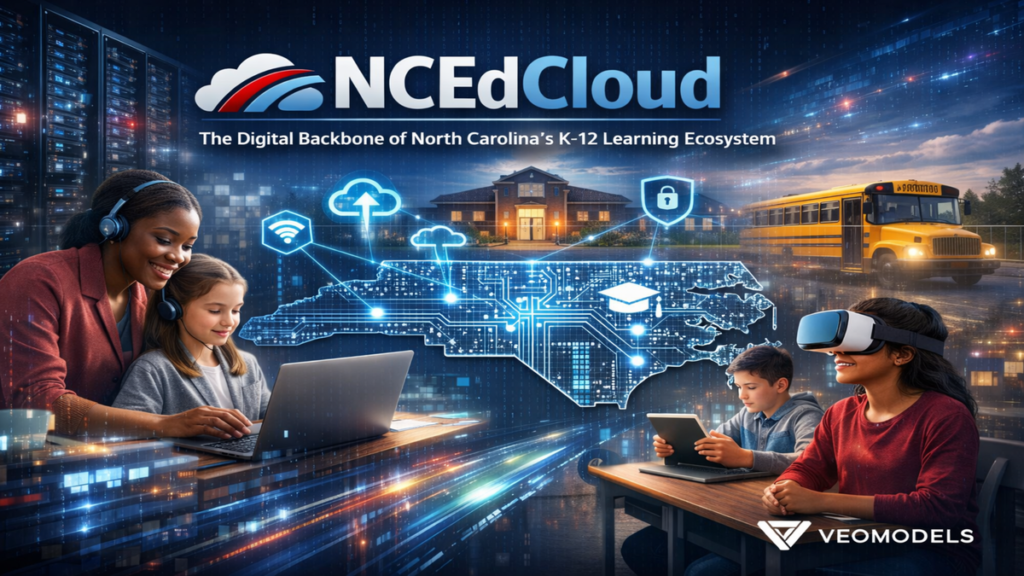

In modern education systems, access to digital tools must be simple, secure, and scalable. NCEdCloud addresses that challenge across North Carolina’s public school system by providing a unified identity platform that connects students, teachers, and administrators to learning applications through a single login. I often examine how large-scale technology systems shape daily workflows in institutions, and few examples illustrate practical digital infrastructure better than this statewide platform.
At its core, NCEdCloud functions as a cloud-based single sign-on (SSO) and identity management system designed specifically for K-12 public education. Through the portal at my.ncedcloud.org or authentication gateway idp.ncedcloud.org, more than 1.5 million users access critical education software such as student information systems, digital textbooks, and classroom management tools.
The platform is managed through a partnership between the North Carolina Department of Public Instruction (NCDPI) and MCNC, the state’s nonprofit technology provider. Hosting infrastructure runs on Amazon Web Services, allowing the system to support millions of daily logins while maintaining high availability.
From my experience evaluating enterprise education software deployments, identity systems often determine whether digital learning environments feel seamless or fragmented. When authentication works well, students simply focus on learning. When it fails, instruction stops.
Understanding how statewide identity platforms operate offers insight into a broader trend: education increasingly depends on digital infrastructure that students never see but rely on every day.
A Statewide Identity Platform Built for Education
North Carolina launched NCEdCloud to simplify access to digital learning environments across the state’s public school districts. Prior to its implementation, students and teachers often managed multiple usernames and passwords for various educational platforms.
The identity system changed that model by creating a centralized authentication service. Instead of logging into each application separately, users authenticate once and receive access to all connected systems.
This structure delivers several operational benefits:
- Reduced password fatigue among students
- Stronger centralized security controls
- Simplified account provisioning for administrators
- Faster access to learning tools during class time
In practice, the platform acts as an intermediary between users and education applications. After login, the portal displays role-based dashboards that differ for students, teachers, parents, and administrators.
When reviewing statewide digital learning initiatives, I’ve consistently found that identity systems become the foundation for nearly every other education technology deployment.
As cybersecurity analyst Bruce Schneier once noted:
“Identity is the new perimeter. Access control determines the security of nearly every modern digital system.”
In K-12 education, where large populations access shared infrastructure, that principle becomes especially important.
How Students and Educators Access the System
Accessing the platform follows a standardized workflow designed to minimize confusion for young users while maintaining security.
New accounts must first be claimed through the official onboarding portal. During this process, users verify their identity and establish login credentials.
Typical access process
| Step | Action | Platform Location |
|---|---|---|
| Account claim | User verifies identity and creates credentials | ncedcloud.mcnc.org |
| Portal login | User signs into the system | my.ncedcloud.org |
| Authentication | Identity provider validates login | idp.ncedcloud.org |
| Application access | User launches apps from dashboard | Connected services |
Once authentication succeeds, users enter a portal interface that functions much like a digital workspace. From there, applications launch without additional logins.
Students frequently access tools such as:
- PowerSchool for grades and attendance
- Learning management platforms
- Digital curriculum tools
- Classroom collaboration software
Teachers, meanwhile, gain additional administrative and instructional tools tied to their professional roles.
Role-Based Portals and Personalized Access
One design decision that stands out in NCEdCloud is its reliance on role-based access control. Rather than giving every user identical dashboards, the system dynamically assigns permissions based on institutional roles.
Students see learning tools.
Teachers see classroom management systems.
Administrators see analytics, reporting, and system configuration controls.
This approach reduces complexity while strengthening security. It also reflects best practices in enterprise identity management.
I’ve worked with several education technology systems where overly broad permissions created unnecessary risk. Limiting access by role dramatically reduces the chance of unauthorized data exposure.
Role-based architecture also allows seamless transitions when individuals change roles. When a student becomes a teacher or an administrator moves districts, identity attributes update automatically.
The system’s integration with PowerSchool provides particularly useful real-time data visibility.
Parents and guardians can monitor:
- Grades
- Attendance
- Assignment progress
- School communications
This transparency improves family engagement in student learning outcomes.
Infrastructure Designed for Millions of Daily Logins
Operating a statewide education identity system requires significant technical infrastructure. NCEdCloud runs on Amazon Web Services, providing scalability and high availability across the platform.
Cloud infrastructure offers several advantages for systems serving large populations.
| Infrastructure Element | Purpose |
|---|---|
| AWS cloud hosting | Scalable computing resources |
| Identity federation | Secure authentication across apps |
| Load balancing | Handles high login volumes |
| Redundant architecture | Prevents downtime during peak use |
During peak school hours, hundreds of thousands of students may attempt to access digital tools simultaneously.
Traditional on-premise servers struggle with this scale. Cloud architecture enables rapid expansion of computing resources during high demand periods.
Technology strategist Gene Kim has emphasized the importance of resilient infrastructure:
“Reliability in digital platforms often determines whether organizations can function effectively.”
For schools, platform outages can halt instruction across entire districts. High availability therefore becomes a critical requirement.
Security and Privacy in K-12 Digital Systems
Security is a central concern when managing digital identities for minors. Platforms like NCEdCloud must protect sensitive educational records while remaining easy for students to use.
Education technology systems must comply with several federal regulations, including:
- FERPA (Family Educational Rights and Privacy Act)
- COPPA (Children’s Online Privacy Protection Act)
Identity platforms help enforce these protections by controlling who can access student information and when.
Security mechanisms typically include:
- Multi-layer authentication processes
- Encrypted communication channels
- Centralized credential management
- Detailed activity logging
Education cybersecurity specialist Doug Levin explains:
“School districts face increasing cyber threats but often operate with limited security resources.”
Centralized identity systems therefore reduce the burden on individual districts by implementing consistent security standards statewide.
Integration with Classroom and Administrative Tools
Education identity platforms become most valuable when they integrate seamlessly with the broader ecosystem of digital tools used in schools.
In North Carolina, NCEdCloud connects to dozens of applications used daily across classrooms and administrative offices.
These integrations typically include:
- Student information systems
- Learning management platforms
- Curriculum software
- Assessment tools
- Digital content libraries
The integration with PowerSchool stands out because it allows students and parents to view grades and attendance directly from linked systems.
Teachers also benefit from simplified access to lesson planning platforms, assessment tools, and classroom communication services.
From my analysis of school technology adoption patterns, integration often determines whether teachers embrace or resist new digital tools. When authentication barriers disappear, technology becomes easier to incorporate into instruction.
The Broader Trend Toward Digital Identity in Education
Statewide identity platforms like NCEdCloud represent a larger shift in how education systems manage digital access.
Historically, each district maintained separate login systems for different applications. This fragmentation created inefficiencies and security vulnerabilities.
Modern identity management systems consolidate access through a centralized authentication layer.
This shift mirrors trends in enterprise IT infrastructure, where identity and access management platforms serve as the foundation for cloud services.
Educational technologist Audrey Watters has observed:
“Education increasingly depends on invisible infrastructure that shapes how learning tools function.”
Identity systems exemplify this idea. Students rarely think about authentication systems, yet they rely on them daily.
As digital learning environments expand, identity platforms will likely become even more central to education infrastructure.
Challenges and Limitations of Large-Scale Identity Systems
Despite their advantages, statewide identity systems also introduce operational challenges.
One issue involves account management for large student populations. Young users frequently forget passwords or struggle with login processes.
Schools must therefore provide support mechanisms such as:
- Password reset systems
- Teacher-assisted authentication
- Help desk services
Another challenge involves maintaining system uptime during critical academic periods.
Testing seasons, for example, generate extremely high login traffic as students access assessment platforms simultaneously.
Technology administrators must carefully monitor infrastructure performance to avoid service disruptions.
Finally, integration with third-party software sometimes requires ongoing configuration updates as vendors modify authentication standards.
These challenges illustrate an important reality: identity platforms require continuous management rather than one-time deployment.
Future Directions for Education Identity Platforms
Looking ahead, education identity systems may incorporate several emerging technologies.
Potential developments include:
- Biometric authentication methods
- AI-assisted security monitoring
- Adaptive identity verification
- Cross-state identity interoperability
Artificial intelligence could help detect unusual login patterns or potential security threats before they disrupt operations.
Another possibility involves federated identity systems that allow students to carry secure digital identities across different institutions.
This concept becomes especially relevant as students transition between K-12 education, higher education, and workforce training environments.
While systems like NCEdCloud already provide robust functionality, digital identity infrastructure will likely continue evolving alongside broader technological changes.
Key Statistics and Adoption Overview
Understanding the scale of the system provides context for its operational importance.
| Metric | Estimate |
|---|---|
| Users connected | Over 1.5 million |
| Schools served | Entire North Carolina public system |
| Daily login volume | Millions |
| Cloud infrastructure | Amazon Web Services |
| Primary portal | my.ncedcloud.org |
These numbers highlight why identity platforms must maintain high reliability and strong security controls.
Large populations relying on a single authentication system create both opportunities and responsibilities for platform administrators.
Takeaways
- NCEdCloud provides a centralized single sign-on system for North Carolina’s K-12 education environment.
- Over 1.5 million students, teachers, and administrators rely on the platform for daily access to learning tools.
- Role-based access control ensures users only see the resources appropriate to their responsibilities.
- Cloud infrastructure hosted on AWS enables the platform to handle millions of login requests each day.
- Integration with systems like PowerSchool allows real-time access to grades and attendance.
- Identity platforms represent foundational infrastructure for modern digital learning environments.
Conclusion
Digital learning environments depend on infrastructure that often operates quietly in the background. Systems like NCEdCloud illustrate how identity management has become a critical component of modern education technology.
By centralizing authentication across hundreds of applications, the platform simplifies access for students and teachers while strengthening security controls. This balance between usability and protection is essential in environments serving large populations of young users.
From an operational perspective, identity platforms also demonstrate how statewide coordination can reduce complexity for school districts. Instead of maintaining dozens of independent login systems, schools rely on a unified authentication framework.
As education continues integrating digital tools into everyday instruction, the importance of identity infrastructure will likely grow. Students may never think about the systems that grant them access to learning resources, but those systems increasingly shape how education functions.
Read: How to Powerwash a Chromebook: Resetting ChromeOS Safely
FAQs
What is NCEdCloud used for?
It provides single sign-on access to digital learning tools used by North Carolina’s public schools, allowing students and staff to access multiple applications with one login.
How do students log into NCEdCloud?
Students typically visit my.ncedcloud.org, enter their credentials, and access connected applications through the portal dashboard.
What systems connect to the platform?
The system integrates with tools such as PowerSchool, learning management systems, and various educational software platforms used across schools.
Is the system secure?
Yes. It uses centralized identity management, encrypted authentication processes, and role-based access controls to protect student information.
How many people use the platform?
More than 1.5 million students, teachers, and administrators across North Carolina’s public education system rely on it daily.