
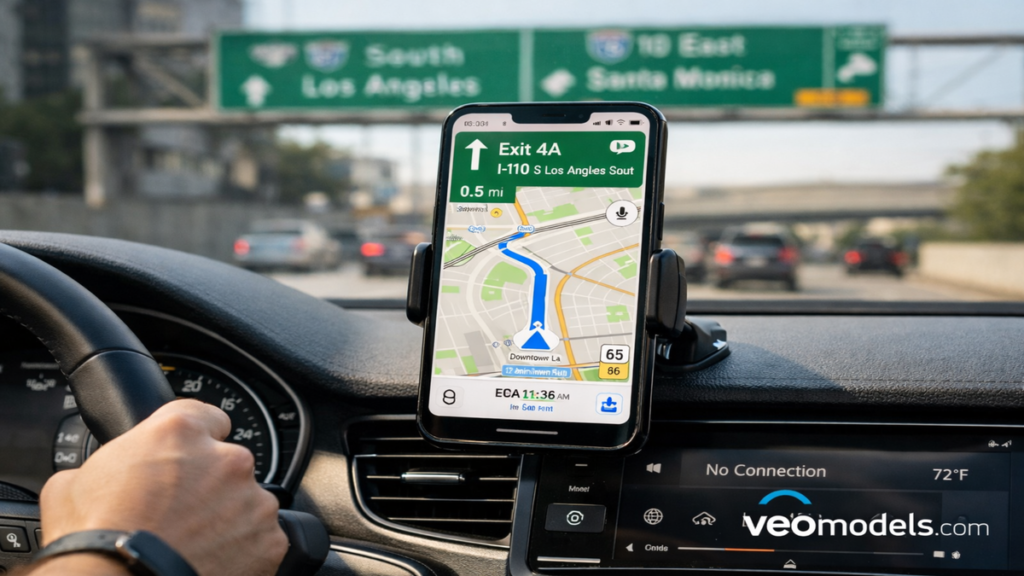

When I first noticed that Google Maps Removes Media Controls from its navigation interface, my reaction was not frustration but curiosity. Interface decisions at this scale are rarely cosmetic. Within the first few hours of testing the updated app across Android Auto and mobile, it became clear that this change reflects deeper shifts in product priorities, safety considerations, and AI-driven interface optimization.
For users searching for answers, here is the immediate takeaway: Google has removed embedded playback controls from the main navigation screen in certain versions and contexts, particularly within Android Auto and select mobile builds. This means drivers can no longer directly control Spotify, YouTube Music, or other streaming apps from within the Maps interface. Instead, media interaction is now separated, requiring a switch to the dedicated media app interface.
From a workflow standpoint, this alters how drivers multitask. From a product strategy perspective, it suggests Google is rethinking cognitive load, interface complexity, and cross-app orchestration. Having worked with enterprise teams evaluating driver-assist systems and in-car AI tools, I recognize this pattern. Interface simplification often signals deeper experimentation around safety, data modeling, and long-term ecosystem integration.
Why Google Adjusted the Interface
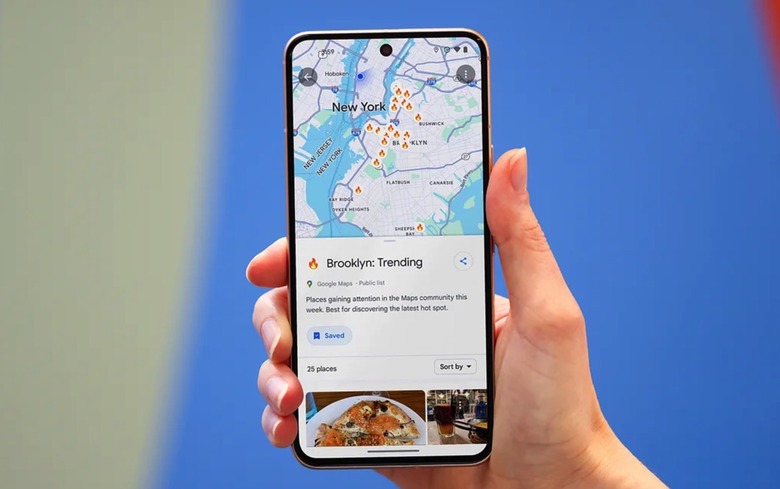
Google has not framed this change as dramatic, yet it represents a meaningful shift in interaction design. Media controls previously appeared alongside navigation instructions, allowing quick play, pause, or skip functions. Removing them reduces on-screen elements and simplifies decision points while driving.
From an applied AI perspective, this aligns with a broader industry trend toward minimizing cognitive distraction. In 2022, the National Highway Traffic Safety Administration reported that distracted driving contributed to over 3,300 fatalities in the United States alone. Interface simplification can directly influence driver attention patterns.
In my work reviewing AI-assisted dashboard systems, I often see teams balancing convenience with liability exposure. Each interactive element increases both data complexity and risk. Removing embedded media controls likely reduces interface clutter and legal exposure while encouraging safer app compartmentalization.
Google Maps Removes Media Controls: What Changed Technically
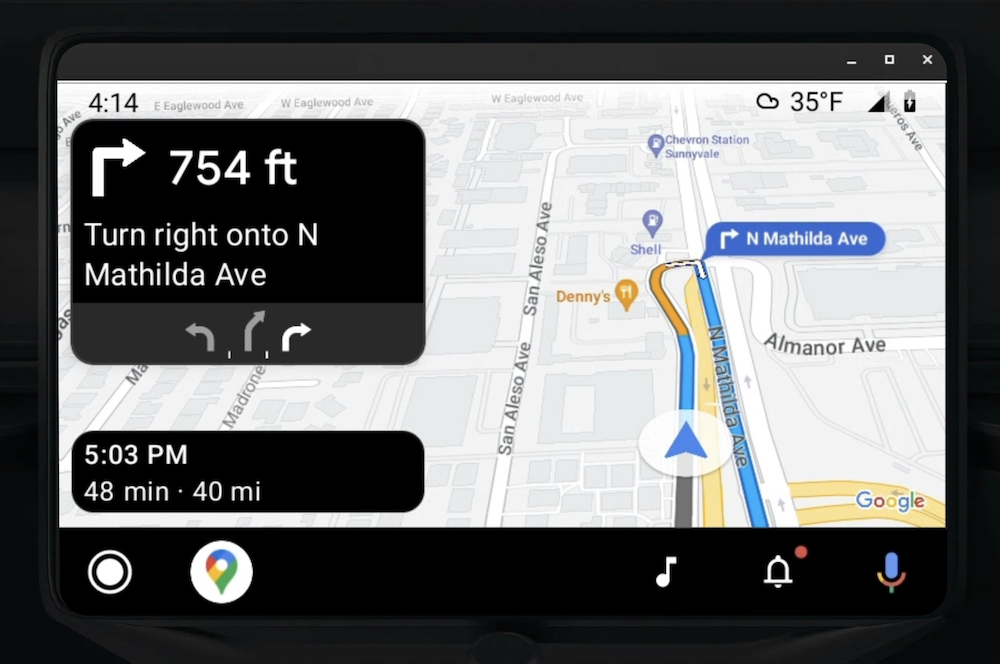
The change is subtle but impactful. Previously, Google Maps integrated playback APIs from media providers, allowing synchronized display and control within the navigation interface. Now, those integrations appear to be deprioritized in certain environments.
Technically, this suggests a shift in how Google manages cross-application orchestration. Rather than merging navigation and media layers, the system now enforces separation between routing intelligence and entertainment controls.
This may simplify memory allocation and UI rendering on lower-powered infotainment systems. Android Auto operates across a wide range of hardware configurations, many of which struggle with heavy multitasking. Reducing UI overlays can improve performance stability.
As a practical analyst of AI deployment in consumer products, I view this as a systems-level optimization rather than a superficial redesign.
Read: How Meta Ads Updates Is Rewriting Digital With AI Automation
Safety and Cognitive Load Considerations
Driving is a high-attention activity. Every on-screen element competes for visual processing bandwidth. Cognitive load theory suggests that reducing simultaneous stimuli improves task focus and decision accuracy.
By removing playback controls, Google reduces the number of actionable elements drivers must parse while navigating. This matters in dense urban environments where route recalculations, lane guidance, and traffic updates already demand attention.
In 2023, the World Health Organization reiterated that distraction remains a leading contributor to road traffic injuries globally. Design decisions that prioritize primary tasks over secondary entertainment align with global safety guidance.
From experience auditing AI-powered mobility tools, I have seen manufacturers shift toward single-task interface prioritization. The Maps update appears consistent with that trajectory.
Platform Strategy and Ecosystem Alignment
This update also reflects ecosystem strategy. Google owns both the navigation layer and major media platforms such as YouTube Music. By separating navigation from playback controls, Google reinforces modular app identity rather than blending experiences.
This could serve several purposes:
| Strategic Factor | Potential Impact |
|---|---|
| App Modularity | Clearer functional boundaries between apps |
| Performance Optimization | Reduced UI complexity on car systems |
| Data Segmentation | More precise behavioral analytics per app |
| Liability Reduction | Lower distraction risk within navigation layer |
When companies separate functionality, they often gain cleaner analytics streams. Instead of mixed interaction signals, Google can now better isolate navigation engagement metrics from entertainment behavior.
In applied AI environments, cleaner data separation improves model training quality and predictive insights.
How This Affects User Workflows
For daily commuters, the most immediate effect is friction. Switching between Maps and a media app requires an additional step. That might seem minor, but small workflow changes accumulate.
In fleet and enterprise mobility contexts, these changes matter more. I have worked with logistics teams that rely on synchronized routing and audio instructions. While consumer media control removal may not affect commercial fleets directly, it signals a broader prioritization of navigation integrity over convenience multitasking.
Here is a comparison of user workflow before and after the update:
| Interaction Step | Before Update | After Update |
|---|---|---|
| Adjust music | Tap control inside Maps | Switch to media app |
| Visual interface | Combined navigation and playback | Navigation-only screen |
| Cognitive demand | Higher multitask complexity | Reduced simultaneous controls |
| App switching | Minimal | Required for playback changes |
The shift encourages intentional interaction rather than passive multitasking.
Regulatory and Liability Context
Technology companies increasingly design with regulatory foresight. In the European Union, road safety initiatives continue to emphasize reduced driver distraction. Meanwhile, U.S. litigation around distracted driving remains active and costly.
By simplifying its navigation interface, Google may be positioning itself defensively. Interface minimalism can serve as a protective measure in legal disputes involving distracted driving incidents.
Dr. David Strayer, a cognitive neuroscientist who studies driver distraction, has noted, “Multitasking while driving significantly impairs attention, even when users believe they are in control.” This insight supports design moves that reduce embedded entertainment options.
When evaluating AI system deployment, I often see legal teams influencing product architecture earlier than engineering teams expect. This change may reflect that cross-functional collaboration.
The Broader Trend Toward Focused Interfaces
The Google Maps decision fits into a wider industry movement. Apple CarPlay has also refined interface simplicity in recent iterations. Tesla has adjusted screen layouts to prioritize driving data over secondary controls.
Interface focus is becoming a competitive differentiator. Simpler systems reduce error probability and user fatigue.
Professor Don Norman, a pioneer in human-centered design, has long argued that “Good design is actually a lot harder to notice than poor design.” Removing visible features sometimes improves usability more than adding new ones.
From observing multimodal system rollouts over the past five years, I see a clear pattern. AI is increasingly used to determine what not to show, rather than what to display.
Data, AI, and Behavioral Modeling Implications
Every interaction within Google Maps feeds behavioral models. Removing media controls may refine signal clarity.
Navigation behavior can now be analyzed without interference from playback adjustments. This may improve traffic prediction models and route optimization systems, which rely on accurate dwell time and interaction signals.
AI thrives on structured, context-pure data. When navigation and media behaviors overlap, interpretation becomes noisier. Separation simplifies model inputs.
Andrew Ng once remarked, “AI is the new electricity.” In product terms, that means AI is embedded everywhere, quietly shaping interface evolution. This interface simplification may be less about design aesthetics and more about long-term model performance.
What Users Should Expect Next
Interface simplification rarely occurs in isolation. Future iterations may introduce voice-first media adjustments, reducing the need for touch-based controls altogether.
Google Assistant integration could compensate for removed on-screen controls. Voice commands like “Pause music” may become the preferred interaction pathway.
I anticipate further refinement in contextual awareness, where the system intelligently limits entertainment interaction in high-density traffic zones while relaxing restrictions on open highways.
In product strategy reviews I have participated in, phased interface simplification often precedes deeper AI-driven automation layers. This change could represent early groundwork for more adaptive navigation environments.
Key Takeaways
- Google has removed embedded media playback controls from certain navigation interfaces.
- The change likely reduces cognitive load and distraction risk.
- Data separation between navigation and entertainment may improve AI modeling quality.
- Workflow friction increases slightly for users who frequently adjust media.
- Regulatory and liability considerations likely influenced the design decision.
- The update aligns with broader industry trends toward interface minimalism.
- Voice integration may become the primary replacement interaction method.
Conclusion
When I evaluate changes like this, I avoid viewing them as isolated feature removals. Interface adjustments at Google’s scale reflect layered considerations involving safety, legal exposure, AI optimization, and ecosystem strategy.
The decision to separate navigation from media playback may inconvenience some users in the short term. However, it signals a long-term prioritization of focused design and structured behavioral modeling. In applied AI systems, clarity often outweighs convenience.
As vehicles become more connected and autonomous features expand, interface discipline will become even more critical. This shift in Google Maps may represent an early move toward more context-aware, safety-aligned navigation environments.
For users, adaptation will be quick. For product analysts, the implications are far more interesting.
Read: Turning a Chromebook Into a Chrultrabook: Running Acer C720 Windows 10
FAQs
Why did Google remove media controls from Maps?
Google likely removed them to reduce distraction, simplify the interface, and separate navigation data from entertainment interactions.
Does this affect Android Auto?
Yes, the change is particularly noticeable in Android Auto environments where integrated playback controls were previously visible.
Can I still control music while navigating?
Yes, but you must switch to the media app interface or use voice commands instead of controlling it within Maps.
Is this change permanent?
Google has not announced it as temporary. Interface updates typically signal longer-term design direction.
Will voice controls replace media buttons?
Voice interaction is the most likely replacement pathway, especially as AI voice systems continue improving.
References
National Highway Traffic Safety Administration. (2022). Distracted driving 2020. https://www.nhtsa.gov/risky-driving/distracted-driving
World Health Organization. (2023). Road traffic injuries fact sheet. https://www.who.int/news-room/fact-sheets/detail/road-traffic-injuries
Norman, D. (2013). The design of everyday things (Revised and expanded edition). Basic Books.
Strayer, D. L., & Watson, J. M. (2016). Psychological science and the law. Current Directions in Psychological Science, 25(2), 85–90.
Ng, A. (2017). Artificial intelligence is the new electricity. Stanford University lecture series. https://hai.stanford.edu/news/andrew-ng-artificial-intelligence-new-electricity