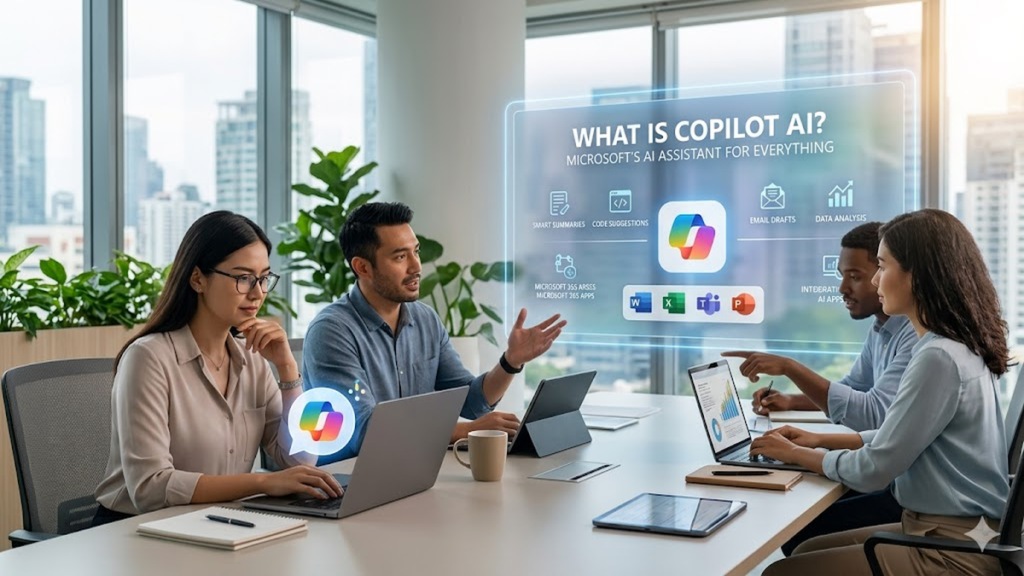

The integration of generative AI into the foundational tools of modern business represents a pivotal shift in how professional work is conceptualized and executed. At the center of this transition is microsoft copilot, a sophisticated orchestration engine that bridges the gap between Large Language Models (LLMs) and proprietary organizational data. Unlike standalone chat interfaces, this system operates within the context of the Microsoft 365 ecosystem, surfacing insights from emails, calendars, and documents to provide real-time assistance. Its primary value proposition lies not just in content generation, but in its ability to reduce “digital debt”—the crushing volume of data and notifications that often hinders deep, meaningful work.
From an industry analyst perspective, the rollout of such tools has moved past the initial phase of novelty into a rigorous period of practical evaluation. Organizations are no longer asking what the technology can do in theory, but how it measurably impacts the bottom line and employee well-being. Early adoption data suggests that while the efficiency gains in rote tasks like meeting summarization are immediate, the broader transformation of complex workflows requires a more nuanced approach to implementation. As we analyze the current landscape, it becomes clear that the success of AI adoption depends less on the underlying code and more on the strategic alignment between human expertise and automated support.
The Architecture of Contextual Intelligence
The efficacy of microsoft copilot is rooted in its unique architecture, specifically the “Copilot System.” This isn’t a simple wrapper for an LLM; it is a sophisticated processing circuit. When a user provides a prompt, the system utilizes “grounding”—a process where the prompt is pre-processed through the Microsoft Graph to retrieve relevant business context. This ensures that the output isn’t just linguistically coherent but factually grounded in the user’s specific files and previous interactions.
In my discussions with IT directors during recent deployment phases, a recurring theme is the necessity of “data hygiene.” The AI is only as effective as the permissions and organization of the underlying data. This structural reality has forced many companies to audit their internal information architecture for the first time in years, realizing that “context” is the most valuable currency in the age of generative systems.
Check Out: AI Writing Tools: Everything You Need to Know in 2026
Quantifying Productivity: Beyond Time-Saving
Measuring the impact of AI in a professional setting requires looking beyond simple minutes saved. While generating a first draft of a proposal in seconds is impressive, the real metric is the “quality of output per unit of effort.” Analysts are observing a “leveling up” effect: junior employees are able to perform tasks previously reserved for mid-level staff, while senior leaders are freed from administrative burdens to focus on high-stakes strategy.
| Metric Category | Pre-AI Baseline | Post-Copilot Implementation |
| Meeting Synthesis | 30-45 mins per hour of meeting | < 5 mins (Automated) |
| Information Retrieval | 9 hours per week (average) | ~2 hours per week |
| Drafting Complexity | High manual cognitive load | Iterative refinement focus |
| Email Management | Reactive/Constant | Proactive/Summarized |
Bridging the Creative-Analytical Divide
One of the most profound shifts I’ve observed is the blurring of lines between creative and analytical roles. With microsoft copilot assisting in Excel data visualization or PowerPoint design, the barrier to entry for high-quality presentation is lowered. However, this creates a new demand for “critical curation.” Professionals must evolve from being “creators” to being “editors-in-chief” of AI-generated content.
The risk here is a phenomenon I call “automated complacency,” where users accept the first output provided by the system without rigorous checking. To combat this, leading firms are implementing “Human-in-the-Loop” (HITL) protocols. These standards ensure that while the AI handles the heavy lifting of structure and synthesis, the final accountability and “soul” of the work remain firmly with the human professional.
The Healthcare Paradigm: Clinical Documentation
In healthcare, the application of these systems is a matter of both efficiency and burnout prevention. Doctors spend an estimated two hours on electronic health record (EHR) tasks for every hour of patient care. By utilizing AI-driven ambient listening and documentation assistants, clinical workflows are being radically streamlined.
“The goal of AI in medicine isn’t to replace the clinician’s judgment, but to strip away the administrative ‘scaffold’ that prevents the clinician from actually seeing the patient. We are moving toward a model of ‘unburdened expertise.'” — Dr. Elena Voss, Healthcare Systems Consultant
This transition allows for more empathetic patient-provider interactions, as the cognitive load of simultaneous note-taking is offloaded to the digital assistant.
Check Out: Pinku AI and the Quiet Shift Toward Emotion-Aware Artificial Intelligence
Financial Services and the Speed of Synthesis
The financial sector thrives on the speed of information. Analysts are now using integrated AI to parse through thousands of pages of earnings call transcripts and regulatory filings in seconds. The ability of microsoft copilot to cross-reference a specific query against a vast library of internal market reports gives firms a distinct edge in generating investment theses.
The challenge in this industry remains data privacy and “hallucination” risks. Financial institutions are often opting for “private instance” deployments where data never leaves the organizational perimeter. My observations suggest that the most successful financial adoptions are those that pair the AI’s speed with a rigorous secondary verification layer, ensuring that “fast” never comes at the cost of “accurate.”
The Educational Shift: Faculty and Admin Support
Higher education is currently grappling with AI from a pedagogical standpoint, but the administrative side is seeing immediate benefits. From drafting syllabi based on institutional standards to managing complex scheduling across departments, AI is acting as a force multiplier for stretched university staff.
| Department | Primary AI Application | Expected Outcome |
| Admissions | Inquiry categorization | 40% faster response times |
| Research | Literature synthesis | Accelerated grant writing |
| Career Services | Resume/Market alignment | Enhanced student placement |
| Administration | Policy drafting/Review | Consistent compliance |
Technical Limitations and the Reality Gap
Despite the momentum, we must remain grounded regarding current limitations. LLMs still struggle with deep logic, complex mathematical proofs, and highly nuanced cultural contexts without significant human prompting. During a recent pilot program I monitored, a marketing team found that while the AI was excellent at generating “social copy,” it struggled to maintain a consistent brand “voice” across a multi-channel campaign without constant correction.
This highlights the “last mile” problem of AI: the final 10% of any task—the part that requires nuance, irony, or deep strategic empathy—remains a human-only domain. We are seeing a shift in skill demand toward “prompt engineering” and “contextual oversight,” which are becoming as fundamental as basic computer literacy was in the 1990s.
Infrastructure and Ethical Deployment
The practical adoption of microsoft copilot necessitates a robust underlying infrastructure. This isn’t just about server capacity, but about the ethical framework of the organization. Who owns the data generated by the AI? How is bias mitigated when the system synthesizes historical data that may contain systemic prejudices?
“Innovation without an ethical guardrail is merely a faster way to make the same old mistakes. True progress in AI adoption is measured by the transparency of the system’s decision-making process.” — Marcus Thorne, Ethics Lead at TechEthos
I have seen several organizations stumble because they treated AI as a “plug-and-play” tool rather than a cultural shift. Success requires clear communication from leadership about how the tool will—and will not—be used to evaluate employee performance.
The Future of Human-Technology Interaction
As we look toward 2026 and beyond, the interface between humans and computers is moving away from menus and clicks toward natural language intent. The “command line” of the future is the spoken or written word. This democratization of technical capability means that a person’s value will increasingly be defined by their ability to ask the right questions rather than their ability to operate specific software.
In my view, we are entering an era of “Augmented Professionalism.” The AI doesn’t replace the worker; it replaces the drudgery of the work. This allows for a resurgence of craftsmanship in professional services, where the human element—creativity, ethics, and interpersonal connection—becomes the primary differentiator in a crowded market.
Closing the Loop: Strategic Implementation
For leaders looking to integrate microsoft copilot, the path forward involves three distinct stages: Readiness, Adoption, and Optimization. Readiness involves securing the data layer; adoption focuses on training the workforce to use the tools effectively; and optimization is the ongoing process of refining workflows based on performance data.
“We are no longer in the era of ‘wait and see.’ The competitive gap between AI-enabled organizations and laggards is widening every quarter. The question is how to scale with intention.” — Sarah Jenkins, COO of Global Logistics Corp
The goal is to create a symbiotic relationship where the AI handles the information processing, and the human provides the wisdom and direction.
Takeaways
- Context is King: The power of integrated AI stems from its access to organizational data through the Microsoft Graph, not just the base model’s training.
- Skill Reorientation: Professional value is shifting from “doing” to “directing,” necessitating new skills in prompt design and critical editing.
- Efficiency vs. Transformation: Initial gains are seen in administrative tasks, but long-term value lies in fundamental workflow redesign.
- Data Hygiene: Successful deployment requires a rigorous audit of internal data permissions and organizational structure.
- Human Accountability: The “Last Mile” of quality, ethics, and strategic nuance remains a strictly human responsibility.
- Leveling the Playing Field: Generative tools act as a “capability floor,” raising the baseline performance of all employees.
Conclusion
The introduction of microsoft copilot into the global workforce is more than a technical upgrade; it is a fundamental shift in the “operating system” of modern business. While the potential for increased productivity is vast, the transition requires a thoughtful balance between automation and human intuition. My analysis suggests that the organizations that will thrive are those that view AI not as a replacement for human talent, but as a sophisticated tool for unlocking it. By automating the mundane, we create the cognitive space necessary for innovation, empathy, and complex problem-solving—qualities that no algorithm can yet replicate. As we move forward, the focus must remain on the outcome-oriented application of these technologies, ensuring that they serve to enhance the human experience of work rather than diminish it.
Check Out: What is Perplexity AI? The AI Search Engine Changing Research
FAQs
1. How does Microsoft Copilot differ from standard ChatGPT?
While both use large language models, Copilot is specifically integrated into Microsoft 365. It uses the Microsoft Graph to access your emails, files, and calendar, providing context-aware assistance that a standalone chatbot cannot replicate without manual data input.
2. Is my business data used to train the global AI models?
No. Microsoft has stated that Copilot adheres to existing data privacy and security commitments. Your tenant-specific data remains within your organization’s perimeter and is not used to train the foundational LLMs used by other customers.
3. What are the biggest hurdles to organizational adoption?
The primary challenges are data over-sharing (where the AI surfaces files users shouldn’t see due to poor permissions), lack of employee training on effective prompting, and the cultural shift required to move from manual to AI-assisted workflows.
4. Can Copilot perform complex data analysis in Excel?
Yes, it can identify trends, generate visualizations, and suggest formulas based on natural language queries. However, for highly complex or sensitive financial modeling, human verification remains essential to ensure the logic aligns with specific business rules.
5. How should a company measure the ROI of an AI rollout?
ROI should be measured through a combination of quantitative metrics (time saved on routine tasks) and qualitative metrics (employee satisfaction, quality of creative output, and the speed of decision-making cycles).
References
- Microsoft. (2024). The Official Microsoft Blog: Introducing the Microsoft 365 Copilot early access program. https://www.microsoft.com/en-us/microsoft-365/blog/
- Gartner. (2025). Predicts 2025: The Evolution of Generative AI in the Workplace. https://www.gartner.com/en/information-technology
- Harvard Business Review. (2024). How Generative AI Is Changing Highly Skilled Work. https://hbr.org/2024/01/how-generative-ai-is-changing-highly-skilled-work
- Forrester Research. (2025). The Economic Impact of AI-Powered Productivity Tools. https://www.forrester.com/report/the-economic-impact-of