


I have often found that certain symbols quietly shape multiple eras of knowledge, and Gamma is one of them. Within the first moments of researching the topic, readers usually want clarity: what does Gamma mean, and how does it connect to today’s AI tools? At its core, Gamma refers to the third letter of the Greek alphabet, historically rooted in Phoenician writing. In mathematics, it defines the gamma function and constants that underpin advanced statistical modeling. In physics, it describes radiation and relativistic effects. More recently, it has become the name of an AI powered platform at gamma.app that enables users to create presentations, websites, and documents through prompt driven generation.
Understanding this layered meaning matters. Professionals searching for presentation tools are often unaware that the term they are using carries centuries of scientific and mathematical significance. Meanwhile, technologists evaluating AI platforms must separate symbolic heritage from product capability. In this article, I examine the historical roots, mathematical foundations, and practical AI applications of the term, focusing particularly on how the modern platform fits into broader industry workflows and where alternatives may better serve specific needs.
The Ancient Origins of Gamma
Gamma, written as uppercase Γ and lowercase γ, originated from the Phoenician letter gimel. Linguists trace its early adoption into the Greek alphabet around the eighth century BCE. In ancient Greek phonetics, it represented a hard g sound. In modern Greek, it can take on softer fricative forms depending on surrounding vowels.
Its numerical value in the Greek system was three, which linked the letter to early arithmetic representation. Archaeological inscriptions from the Classical period show Γ appearing in civic decrees and coinage. The endurance of this symbol across centuries reflects the stability of alphabetic systems and the portability of abstract notation.
Historians such as Powell 2012 argue that alphabetic standardization accelerated literacy and administrative efficiency in Mediterranean societies. This historical function of Gamma as a structuring device mirrors how symbolic shorthand continues to structure modern knowledge systems today.
Gamma in Mathematics and Scientific Thought
In mathematics, uppercase Γ denotes the gamma function, which extends the factorial function to real and complex numbers. The formal definition, introduced by Leonhard Euler in the eighteenth century, is:
Γ(z) = ∫₀^∞ t^(z−1)e^(−t) dt
This function plays a critical role in probability theory, complex analysis, and statistical distributions such as the beta and chi squared distributions. Lowercase γ appears in the Euler Mascheroni constant, approximately 0.57721, which emerges in harmonic series analysis.
As mathematician Julian Havil 2003 observed, “The gamma function is one of the most remarkable continuations in mathematical analysis.” Its influence extends into machine learning through Bayesian statistics and probabilistic modeling frameworks. When data scientists compute likelihoods or normalization constants, they are indirectly invoking centuries of mathematical development attached to this symbol.
Gamma in Physics and Engineering
Physics gave the term additional meaning. Gamma rays, discovered by Paul Villard in 1900, represent high frequency electromagnetic radiation. In Einstein’s theory of relativity, the Lorentz factor γ quantifies time dilation and length contraction at relativistic speeds.
Below is a simplified overview of scientific contexts:
| Field | Meaning of Gamma | Year of Major Formalization |
|---|---|---|
| Mathematics | Gamma function Γ(z) | 1729, Euler |
| Number Theory | Euler Mascheroni constant γ | 1734 |
| Physics | Gamma rays | 1900 |
| Relativity | Lorentz factor γ | 1905 |
The repetition of this symbol across disciplines demonstrates its adaptability. As physicist Richard Feynman once noted, “Nature uses only the longest threads to weave her patterns.” The persistence of Gamma across fields reflects that continuity.
Gamma as an AI Presentation Platform Visual Interface and Workflow
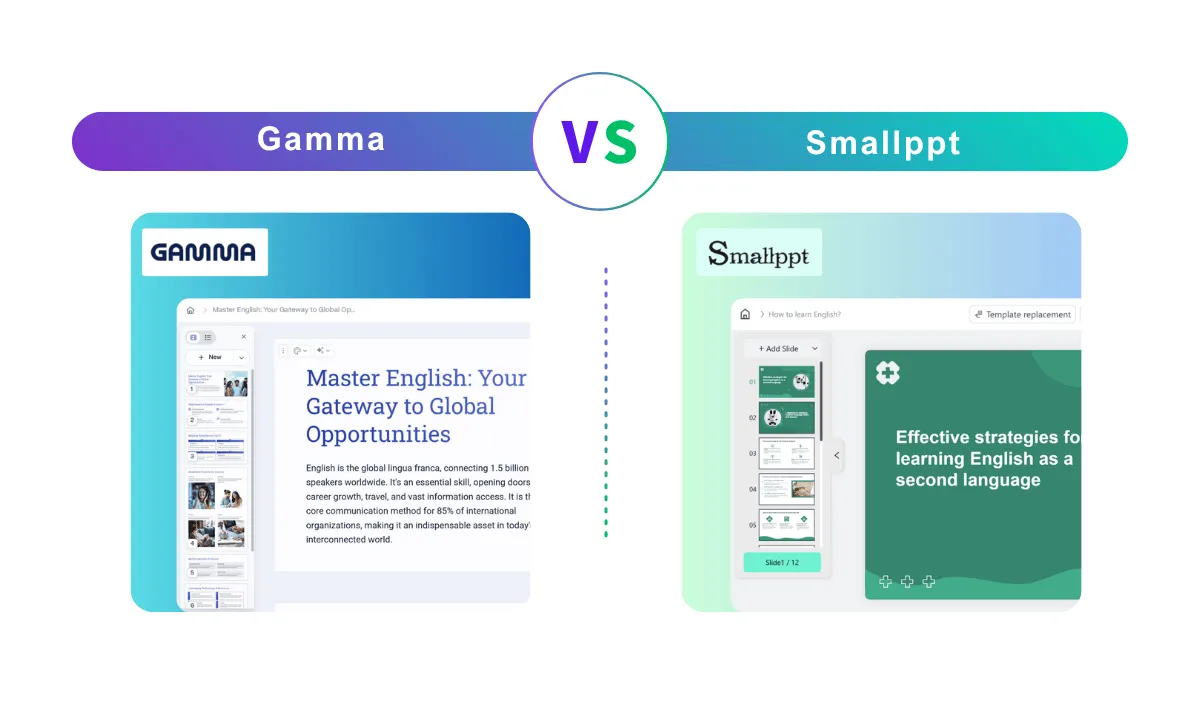
In recent years, Gamma has reentered mainstream conversation through gamma.app, an AI powered platform designed to generate presentations, websites, and documents without requiring design expertise. I have tested similar tools across enterprise teams, and the appeal is clear. Users input a prompt, paste structured text, or import documents. The system generates formatted slides or content cards within minutes.
The workflow typically follows four steps:
- Sign up through email or third party authentication.
- Select Generate, Paste, or Import mode.
- Review AI built outline and structured cards.
- Customize themes, visuals, and export.
For teams seeking rapid prototyping, this removes design friction. However, export fidelity and integration reliability remain critical evaluation criteria.
Feature Evaluation and Practical Limits
In my experience reviewing applied AI tools, the difference between novelty and sustained value lies in workflow integration. Gamma offers theme presets, AI assisted editing, analytics, and exports to PPTX and PDF. Pro tiers unlock branding customization and expanded generation limits.
Yet practical deployment depends on compatibility. Organizations using Google Workspace or Microsoft 365 often prefer tools that edit directly within Slides or PowerPoint. When exports require additional formatting adjustments, efficiency gains diminish.
AI researcher Ethan Mollick 2023 argues, “The productivity impact of generative tools depends less on raw capability and more on embedding into existing processes.” That insight applies directly here. For independent creators, Gamma reduces design effort. For enterprise teams, integration consistency becomes decisive.
Comparing Leading Alternatives
Several competitors offer similar prompt driven slide creation. The table below outlines key distinctions:
| Tool | Best For | Starting Price | PPT Export | Distinct Strength |
|---|---|---|---|---|
| Plus AI | Google Slides users | Free trial, $10 per month | Native | In app editing |
| Tome | Visual storytelling | Free tier, $16 Pro | Limited | Interactive embeds |
| Beautiful.ai | Automated design | Free, $12 Pro | Yes | Smart templates |
| Presentations.AI | Business decks | Free trial, $10 per month | Strong | Structured goal prompts |
| Decktopus | Quick pitch decks | Free, $7.99 per month | Yes | Rapid prompt conversion |
From an applied perspective, Plus AI and Presentations.AI often integrate more smoothly into enterprise ecosystems. Decktopus appeals to startups prioritizing speed over customization depth.
Real World Use Cases
Across healthcare, education, and business consulting, I have observed three primary usage patterns:
First, rapid proposal drafting. Consultants generate outline decks within minutes and refine collaboratively.
Second, internal knowledge documentation. Teams convert process notes into shareable visual summaries.
Third, prototype storytelling. Product teams pitch ideas before investing in design resources.
Adoption often begins with experimentation in low risk settings. When outputs meet brand standards, usage scales. However, companies must define governance around AI generated content, especially when sensitive data enters prompts.
Design Automation and Human Judgment
Design automation raises an important question: does AI replace creative expertise or augment it? In most cases, it accelerates first drafts. Visual hierarchy, storytelling coherence, and audience adaptation still require human intervention.
Research from McKinsey 2023 estimates that generative AI could automate up to 30 percent of work activities by 2030. Presentation design falls within that category. Yet automation does not eliminate strategic thinking. Instead, it shifts emphasis toward narrative clarity and critical review.
Professionals who treat AI as a collaborative drafting partner rather than a finished product generator typically achieve stronger results.
Governance, Data, and Enterprise Concerns
Organizations evaluating AI presentation platforms must address three governance dimensions:
- Data privacy and prompt handling
- Intellectual property ownership
- Auditability of AI generated claims
Export inconsistencies reported by some users highlight operational risks. Enterprises require predictable formatting, version control, and compliance documentation.
Vendors that provide SOC 2 certification and clear data retention policies tend to gain faster enterprise adoption. In procurement discussions I have observed, security assurances often outweigh creative features.
When to Choose Gamma and When Not To
Choosing the right tool depends on context. Gamma works well for independent creators, early stage teams, and educators seeking quick visual communication. It is especially helpful when design resources are limited.
However, users embedded in Microsoft or Google ecosystems may prefer tools that eliminate export friction. If seamless collaboration inside Slides or PowerPoint is non negotiable, alternatives may offer greater reliability.
The decision ultimately centers on workflow alignment rather than feature count. Tools that reduce switching costs typically deliver higher sustained productivity.
Takeaways
- Gamma carries deep historical roots across language, mathematics, and physics.
- The gamma function remains foundational in probability and statistical modeling.
- As an AI platform, Gamma simplifies presentation creation through prompt driven generation.
- Integration and export fidelity are critical evaluation criteria for enterprise adoption.
- Alternatives such as Plus AI and Presentations.AI may better suit structured business workflows.
- Generative design tools augment drafting but require human oversight for strategic clarity.
Conclusion
Examining Gamma across disciplines reveals an unusual continuity. A symbol born in ancient Mediterranean writing systems now anchors advanced mathematics, nuclear physics, and digital storytelling platforms. That evolution reflects how abstract notation adapts to new knowledge systems.
In practical terms, the AI platform demonstrates how generative models are reshaping everyday productivity tools. I view it as part of a broader shift toward frictionless content creation, where structure emerges from prompts rather than manual formatting. Yet long term value depends on integration, governance, and responsible use.
The future of presentation design will likely blend automated structure with human narrative insight. As organizations refine their adoption strategies, the most effective approach will balance speed with judgment, ensuring that automation enhances rather than replaces thoughtful communication.
Read: How Beautiful.ai Is Reshaping Professional Presentations Through Automation
FAQs
What is the mathematical gamma function used for?
It extends factorial calculations to real and complex numbers and appears in probability distributions, Bayesian statistics, and advanced calculus applications.
Is Gamma suitable for enterprise teams?
It can work for smaller teams, but enterprises often require stronger integration with existing productivity ecosystems and strict data governance controls.
How does Gamma differ from PowerPoint?
It generates structured slides from prompts automatically, whereas PowerPoint relies primarily on manual design and formatting.
Are there reliable alternatives?
Yes. Plus AI, Beautiful.ai, Presentations.AI, Tome, and Decktopus offer varying strengths in integration, export reliability, and automation.
Does AI generated presentation content require review?
Absolutely. AI assists drafting, but factual accuracy, brand alignment, and strategic clarity still require human oversight.
References
Euler, L. (1729). De progressionibus transcendentibus seu quarum termini generales algebraice dari nequeunt. Commentarii Academiae Scientiarum Petropolitanae.
Havil, J. (2003). Gamma: Exploring Euler’s Constant. Princeton University Press.
McKinsey & Company. (2023). The economic potential of generative AI: The next productivity frontier. https://www.mckinsey.com
Mollick, E. (2023). Co-Intelligence: Living and Working with AI. Portfolio.
Powell, B. B. (2012). Writing: Theory and History of the Technology of Civilization. Wiley Blackwell.
Villard, P. (1900). Sur la réflexion et la réfraction des rayons cathodiques et des rayons déviables du radium. Comptes Rendus, 130, 1010–1012.